Cabo de la Vela
A remote desert paradise in Colombia's La Guajira, Cabo de la Vela dazzles with golden dunes, turquoise waters, and the iconic Playa del Pilón de Azúcar. A surreal escape for adventure and serenity.
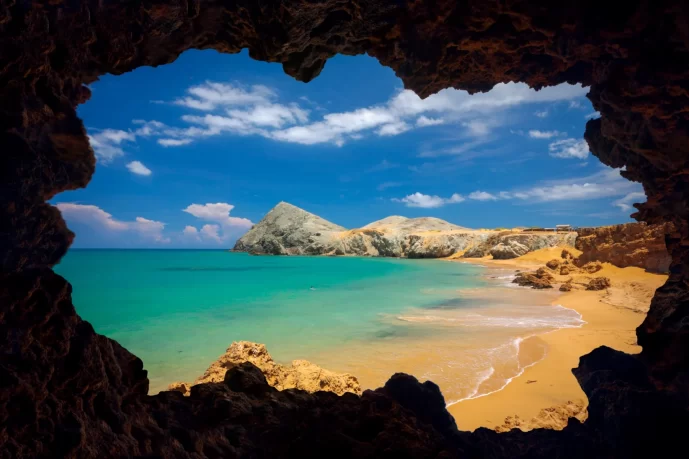
Perched on Colombia’s windswept La Guajira Peninsula, Cabo de la Vela is a raw and poetic escape where the desert meets the Caribbean. This remote beach town, cherished by the Wayuu people, offers stark beauty—golden dunes tumbling into turquoise waters, flamingo-dotted lagoons, and Playa Arcoiris’ multihued sands. A place of solitude and sunsets, it whispers of untamed landscapes and quiet reverie.
Faits sur la destination
- Official Name: N/A
- Type of Destination: Beach Town
- Brief Description: A remote coastal gem in Colombia's La Guajira, where golden sands meet turquoise waters, and the indigenous Wayúu culture thrives amidst windswept dunes and dramatic cliffs.
- Location: Caribbean Region (Región Caribe), La Guajira Department, near Playa Arcoiris.
- Year Established/Founded: N/A
- Governing Body/Management: Local indigenous Wayúu communities.
- Significance/Known For: Sacred site for the Wayúu people, stunning desert-meets-ocean landscapes, and kite-surfing conditions.
- Size/Area: N/A
- Population: Small, predominantly Wayúu inhabitants.
- Main Attractions/Key Features:
- Playa Arcoiris (Rainbow Beach), where sands shimmer in hues of pink and gold.
- El Faro (The Lighthouse), offering panoramic sunset views.
- Pilón de Azúcar, a sacred hill with sweeping coastal vistas.
- Best Time to Visit: December to April, when winds are ideal for kite-surfing and rains are scarce.
- Entrance Fee/Ticket Info: Free access, though some attractions may request small donations.
- Operating Hours: N/A
- Website: N/A
L'essentiel
- Top Attractions: Pilon de Azucar, Cabo de la Vela, Playa Ojo de Agua, Playa del Pilón de Azúcar, Playa Arcoiris
- Mois les plus propices à la visite : Décembre, février, janvier, novembre
Histoire
A Windswept Legacy: The History of Cabo de la Vela
Perched on the arid northern tip of Colombia's La Guajira Peninsula, Cabo de la Vela is a place where history whispers in the salt-laden breeze. This remote coastal enclave, whose name translates to "Cape of the Sail," has long been a crossroads of indigenous culture, European exploration, and maritime lore. The Wayuu people, the region's ancestral inhabitants, knew it as Jepirra, a sacred site where the spirits of the departed journeyed to the afterlife. Its dramatic cliffs and turquoise waters first drew Spanish explorers in the early 16th century, who mistakenly believed it to be a gateway to El Dorado. Today, the cape remains a place of quiet mystique, where the past lingers in the rhythms of fishing boats and the enduring traditions of the Wayuu.
Dates historiques clés
- 1499: Spanish explorer Alonso de Ojeda, accompanied by Amerigo Vespucci, becomes the first European to sight Cabo de la Vela during an expedition along the northern coast of South America. The cape's name is derived from the indigenous practice of hanging sails as territorial markers.
- 16th century: The Spanish establish a pearl-fishing outpost, exploiting the region's abundant oyster beds. The settlement is short-lived due to harsh conditions and resistance from the Wayuu, who fiercely defend their autonomy.
- 19th century: Cabo de la Vela becomes a minor hub for coastal trade, with merchants exchanging salt, fish, and contraband goods. The Wayuu maintain their cultural dominance, blending traditional practices with limited outside influence.
- 20th century: The rise of industrial salt mining in nearby Manaure shifts economic activity away from the cape, leaving it largely untouched by modernization. Its isolation preserves its rugged beauty and Wayuu heritage.
- 21st century: Cabo de la Vela emerges as an off-the-beaten-path destination for travelers seeking unspoiled landscapes and cultural immersion, though development remains minimal out of respect for the Wayuu way of life.
Visites et excursions d'une journée
Popular Tours & Day Trips from Cabo de la Vela
Pilón de Azúcar & Playa Arcoiris
A short journey from Cabo de la Vela, Pilón de Azúcar is a sacred hill offering panoramic views of the desert meeting the Caribbean. Nearby, Playa Arcoiris enchants with its multicolored sands and tranquil waters. The excursion, ideal for nature lovers and photographers, takes about half a day. Visitors often combine it with a stop at a local Wayuu settlement to learn about indigenous culture.
Sanctuaire de Faune et de Flore Los Flamencos
This protected coastal wetland, roughly two hours from Cabo de la Vela, is a haven for birdwatchers. The Santuario de Fauna y Flora Los Flamencos is famed for its flamingo colonies, which gather in the shallow lagoons. The tour includes a boat ride through the mangroves, offering glimpses of herons, pelicans, and other wildlife. Best visited at sunrise or sunset for optimal light and bird activity.
Ojo del Agua & Bahía Hondita
A hidden gem northeast of Cabo de la Vela, Ojo del Agua is a natural freshwater spring surrounded by desert. The journey continues to Bahía Hondita, a secluded bay with pristine beaches and turquoise waters. This full-day trip appeals to adventurers seeking solitude and untouched landscapes. A 4x4 vehicle is recommended due to the rugged terrain.
Wayuu Cultural Experience
For those intrigued by local traditions, a visit to a Wayuu community provides insight into the indigenous way of life. Guests may witness weaving demonstrations, partake in traditional meals, or hear stories passed down through generations. The experience, typically half a day, is suitable for culturally curious travelers and families.
Kitesurfing at El Faro Beach
The windswept shores of El Faro Beach make it a prime spot for kitesurfing. Several local operators offer lessons and equipment rentals for beginners and experienced riders alike. The activity is best suited for thrill-seekers, with ideal conditions from December to April. Even spectators can enjoy the vibrant spectacle of colorful kites against the desert backdrop.
Quand visiter
Répartition saisonnière
Cabo de la Vela, a serene beach town in Colombia's La Guajira Department, experiences a tropical desert climate with distinct dry and wet seasons. The region's weather is characterized by warm temperatures year-round, but seasonal variations in wind and rainfall can significantly influence the travel experience.
Dry Season (December–April)
The dry season brings clear skies, minimal rainfall, and temperatures ranging from 28°C to 35°C (82°F–95°F). The trade winds, known locally as los vientos alisios, are particularly strong from January to March, making this period ideal for wind-based activities like kitesurfing. However, the intense sun and arid conditions can be harsh for those unaccustomed to the climate.
- Pros: Perfect for beach lounging, water sports, and exploring the desert landscapes. Fewer mosquitoes due to low humidity.
- Cons: High temperatures and strong winds may deter some travelers. Limited shade can make midday excursions uncomfortable.
Notable events include the Festival de la Cultura Wayuu in May (transitioning into the wet season), celebrating the indigenous Wayuu culture with music, dance, and traditional crafts.
Wet Season (May–November)
Rainfall increases, particularly from September to November, though showers are typically brief and sporadic. Temperatures remain warm, averaging 30°C (86°F), but humidity rises. The landscape becomes greener, and the occasional rain cools the air, making outdoor activities more pleasant.
- Pros: Lush scenery, fewer tourists, and lower accommodation prices. The sea is calmer, ideal for swimming and snorkeling.
- Cons: Some dirt roads may become impassable after heavy rains, limiting access to remote areas. Mosquito activity increases.
Local festivities are scarce during this period, but the quieter atmosphere allows for a more intimate experience of Cabo de la Vela's natural beauty.
Recommandation générale
The best time to visit Cabo de la Vela is during the dry season, particularly from December to April, when the weather is most favorable for beach activities and exploration. For travelers seeking solitude and lower prices, the early wet season (May–August) offers a compelling alternative, though with occasional rain disruptions.
Considérations
Peak tourist season aligns with the dry months, bringing higher prices and busier beaches. Off-peak travel (wet season) provides a more tranquil experience but requires flexibility due to unpredictable weather. Regardless of the season, early mornings and late afternoons are the most comfortable times for outdoor activities.
Ce qu'il faut emporter
Essentials for Cabo de la Vela
A remote beach town in Colombia's La Guajira, Cabo de la Vela blends desert landscapes with Caribbean shores. Pack light but thoughtfully—resources are limited, and the sun is relentless.
Sun & Sand Protection
- High-SPF Reef-Safe Sunscreen: The sun here is intense, and traditional sunscreens harm fragile marine ecosystems.
- Wide-Brimmed Hat & UV-Blocking Sunglasses: Essential for shade during long beach walks or moto-taxi rides across dusty terrain.
- Lightweight Long-Sleeve Cover-Up: Protects against sunburn during midday excursions without overheating.
Équipement pratique
- Sturdy Sandals or Water Shoes: Rocky shores and salt flats require footwear that can handle both water and rough paths.
- Collapsible Reusable Water Bottle: Freshwater is scarce; refill where possible to stay hydrated and reduce plastic waste.
- Dry Bag or Waterproof Pouch: Safeguard electronics and cash during boat trips or sudden wind gusts.
Local Conditions
- Cash in Small Denominations (COP): ATMs are nonexistent, and vendors rarely accept cards.
- Basic First-Aid Kit: Include antiseptic, bandages, and rehydration salts—medical facilities are minimal.
- Eco-Friendly Toiletries: Biodegradable soap and shampoo are respectful of the area's limited water treatment.
Culture
The Wayúu: Guardians of the Land
Cabo de la Vela is a sacred place for the Wayúu, Colombia's largest Indigenous group, who call it Jepirra—the gateway to the afterlife. Their presence is woven into every aspect of life here, from the vibrant mochilas (handwoven bags) sold by artisans to the quiet reverence for the desert’s spiritual energy. Visitors should approach interactions with humility; the Wayúu are hospitable but deeply protective of their traditions.
A Landscape That Shapes Culture
The stark beauty of La Guajira’s desert meeting the Caribbean has forged a culture of resilience. Fishing and salt harvesting remain vital, with techniques passed down through generations. The chinchorros (traditional hammocks) strung between palapas are not just for rest—they symbolize the rhythm of life here, where the midday sun dictates activity.
Local Etiquette Notes
- Always ask permission before photographing Wayúu people or their homes.
- Bartering is expected at artisan stalls, but do so with respect and a smile.
- Water is scarce; conserve it without being reminded.
Music and Dance: The Pulse of the Desert
The yonna, a traditional Wayúu dance, is occasionally performed for visitors, its circular steps mimicking the wind. More common is the sound of accordion-led vallenato, blending with waves—a reminder of the region’s Colombian roots. Nightfall might bring impromptu gatherings with chirrinche (local sugarcane liquor) and storytelling.
Cuisine: Salt, Wind, and Fire
Food here is elemental. Friche (goat stew fried in its own fat) is a Wayúu staple, while arroz de camarón (shrimp rice) reflects the coast. Seek out pan de bono from roadside vendors—its cheesy sweetness a contrast to the arid landscape. Meals are often shared on the ground, emphasizing community.
Festivals and Sacred Sites
While Cabo lacks large festivals, the Pilón de Azúcar hill draws pilgrims who leave offerings for ancestors. The nearby Ojo del Agua lagoon is another spiritual site—swimming is permitted, but loud noises are frowned upon. Time your visit for December to witness Wayúu enramadas, where music and ritual celebrate the rainy season’s return.