Punta Gallinas
A remote paradise at Colombia's northernmost tip, Punta Gallinas dazzles with golden dunes, turquoise waters, and serene beaches like Punta Agujas. Explore Bahía Hondita's untouched beauty and the iconic Faro lighthouse.
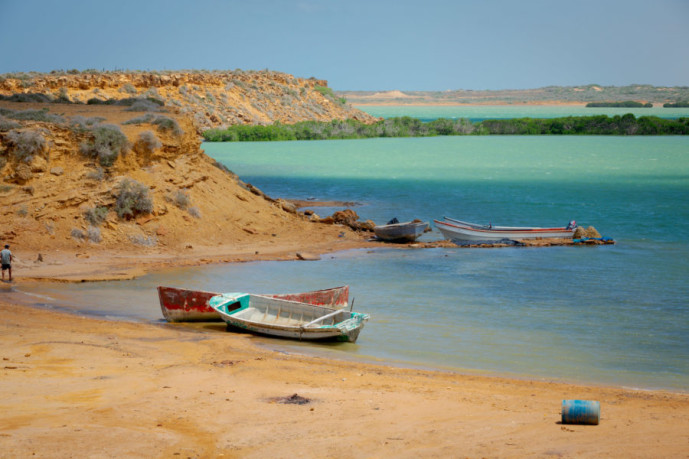
Punta Gallinas, Colombia's northernmost tip, is a windswept paradise where the desert meets the Caribbean in a dramatic embrace. Here, the ochre dunes of La Guajira spill into turquoise waters, flamingos wade through salt flats, and the lonely Faro lighthouse stands sentinel. A place of raw beauty and quiet solitude, it whispers of untamed landscapes and the soul of the Caribbean.
Faits sur la destination
- Official Name: N/A
- Type of Destination: Coastal natural landmark and remote desert peninsula
- Brief Description: Punta Gallinas is the northernmost point of South America, a windswept landscape of dramatic cliffs, golden dunes, and secluded beaches where the desert meets the Caribbean Sea.
- Location: Northern tip of the La Guajira Peninsula, Caribbean Region of Colombia, near the border with Venezuela
- Year Established/Founded: N/A (natural formation)
- Governing Body/Management: Partially within the Flamencos Wildlife Sanctuary (SFF Los Flamencos), managed by Colombia’s National Natural Parks System
- Significance/Known For: The northernmost point of the South American continent; a starkly beautiful desert-meets-sea ecosystem inhabited by Wayuu Indigenous communities and flamingo populations.
- Size/Area: N/A (exact area not commonly cited; part of the larger La Guajira Desert region)
- Population: Sparsely populated by Wayuu Indigenous settlements; no formal urban center
- Main Attractions/Key Features:
- Faro de Punta Gallinas (lighthouse marking the continent’s northern tip)
- Playa Punta Agujas (serene beach with striking rock formations)
- Bahía Honda (a sheltered bay with turquoise waters and traditional Wayuu fishing spots)
- Best Time to Visit: December to April (dry season with milder winds; avoid hurricane season overlaps in late autumn).
- Entrance Fee/Ticket Info: Free access, but tours often require local Wayuu guides for navigation.
- Operating Hours: N/A (open landscape; lighthouse access may vary)
- Website: N/A (no prominent official site; consult Colombia’s National Parks System for sanctuary details)
L'essentiel
- Top Attractions: Dunas De Taroa, playas Punta Agujas, Mirador de Casares
- Mois les plus propices à la visite : Décembre, février, janvier, novembre
Histoire
History of Punta Gallinas
Punta Gallinas, the northernmost point of South America, is a place where the stark beauty of the desert meets the turquoise waters of the Caribbean. This remote and windswept peninsula in Colombia's La Guajira Department has long been inhabited by the indigenous Wayuu people, who have adapted to its arid landscape and coastal resources. While Punta Gallinas lacks a written colonial history as prominent as other Caribbean destinations, its significance lies in its natural grandeur and the resilience of its people. The area remained largely untouched by European settlers due to its harsh climate, though it became a strategic landmark for navigators and pirates during the colonial era. Today, its isolation preserves a sense of timelessness, where the past lingers in the traditions of the Wayuu and the untouched dunes.
Dates historiques clés
- Pre-Columbian Era: The Wayuu people, part of the Arawak linguistic family, established semi-nomadic communities in La Guajira, relying on fishing, goat herding, and trade with neighboring tribes.
- 16th Century: Spanish explorers charted the region, naming it "Punta Gallinas" (Cape Hens) for its wild birds. The area's remoteness spared it from intensive colonization, leaving Wayuu culture largely intact.
- 19th Century: Punta Gallinas became a reference point for maritime navigation, with its lighthouse (Faro de Punta Gallinas) later constructed in the 20th century to guide ships through the perilous waters.
- 20th Century: The region gained attention for its salt mines and pearl diving, though these industries dwindled, leaving fishing and tourism as the primary economic activities.
- 21st Century: Designated part of the Flamingos Flora and Fauna Sanctuary (SFF Los Flamencos), Punta Gallinas is now protected for its ecological and cultural significance, drawing intrepid travelers seeking unspoiled landscapes.
Visites et excursions d'une journée
Punta Gallinas Day Tours
Punta Gallinas, the northernmost tip of South America, offers a raw and untamed beauty that is best explored through guided excursions. These tours reveal the stark desert landscapes, pristine beaches, and indigenous Wayúu culture that define this remote corner of Colombia.
1. Faro de Punta Gallinas & Dunes of Taroa
A journey to the iconic Faro de Punta Gallinas lighthouse, marking the continent's northernmost point, is a must. The tour often includes a stop at the dramatic Dunes of Taroa, where golden sands plunge directly into the Caribbean Sea. Visitors can slide down the dunes or simply marvel at the surreal landscape. The excursion typically lasts half a day and is ideal for adventure seekers and photographers.
2. Bahía Honda & Flamingo Sanctuary
This tranquil boat trip takes travelers to Bahía Honda, a serene bay where the desert meets the sea. The area is part of the Santuario de Fauna y Flora Los Flamencos, a protected zone where pink flamingos wade through shallow waters. Birdwatchers and nature lovers will appreciate the quiet beauty of this ecosystem. The tour lasts around 3–4 hours and includes light hiking.
3. Wayúu Cultural Experience
A visit to a Wayúu indigenous community offers insight into the traditions of the region's native people. Guests may witness weaving demonstrations, learn about ancestral customs, and share a simple meal. This immersive experience, usually lasting half a day, is suited for culturally curious travelers seeking authentic connections.
4. Punta Agujas Beach Exploration
The secluded Punta Agujas beach is a hidden gem, accessible via a rugged 4x4 ride. Its untouched shores and striking rock formations make it perfect for solitude and reflection. The excursion, often combined with other stops, is best for those who appreciate raw, unspoiled nature.
Quand visiter
Best Time to Visit Punta Gallinas
Punta Gallinas, the northernmost tip of South America, is a place of stark beauty, where the desert meets the Caribbean Sea. Its climate is arid and influenced by trade winds, with distinct dry and wet seasons shaping the experience of visitors. Below is a seasonal breakdown to help you plan your journey.
Dry Season (December–April)
The dry season brings relentless sunshine and minimal rainfall, with temperatures ranging from 28°C to 35°C (82°F–95°F). The winds are strong, making it ideal for kiteboarding and windsurfing along the coast. However, the heat can be intense, and the landscape appears parched.
- Pros: Clear skies, perfect for photography and beach activities. Fewer mosquitoes.
- Cons: Scorching midday sun; limited water sources in the desert.
- Events: The Wayuu New Year (May) occasionally falls at the tail end of this season, offering cultural insights.
Wet Season (May–November)
Rainfall increases, particularly from September to November, though it remains sporadic. Temperatures hover between 26°C and 32°C (79°F–90°F), with higher humidity. The desert blooms briefly, and the flamingos at Santuario de Fauna y Flora Los Flamencos are more active.
- Pros: Lush, green landscapes; cooler evenings. Ideal for birdwatching.
- Cons: Muddy roads may disrupt access to remote areas like Bahía Honda.
- Events: Local Wayuu festivals, though less tourist-oriented, occur sporadically.
Shoulder Seasons (Late April–Early May & Late November–Early December)
These transitional periods offer a balance between the dry and wet seasons. Temperatures are moderate, and crowds are minimal.
- Pros: Pleasant weather for hiking and exploring the Faro de Punta Gallinas.
- Cons: Unpredictable rainfall; some tours may operate less frequently.
Recommandation générale
The dry season (December–April) is best for those seeking adventure sports and reliable access to all sites. For nature enthusiasts, the wet season (May–November) reveals a greener, more vibrant landscape. Shoulder seasons appeal to travelers who prefer solitude and milder conditions.
Considérations
Tourist numbers peak in December and January, coinciding with Colombian holidays, which may raise prices. Visiting in September or October offers lower rates and a more tranquil experience, though some roads may be challenging. Always confirm accessibility to remote areas like Punta Agujas in advance.
Ce qu'il faut emporter
What to Pack for Punta Gallinas
Punta Gallinas, Colombia's northernmost point, is a rugged desert-meets-coast landscape where the Caribbean's turquoise waters meet golden dunes. The region's arid climate, strong winds, and remote terrain demand thoughtful packing.
Essentials for the Elements
- Lightweight, long-sleeved clothing: Protects against the relentless sun and wind while keeping you cool.
- Sturdy sandals or water shoes: Ideal for walking on hot sand and rocky shores, especially near Bahía Honda.
- Wide-brimmed hat with a chin strap: The wind here is fierce—ordinary hats won’t stay put.
- High-SPF, reef-safe sunscreen: The sun is intense, and the region’s fragile ecosystems demand eco-conscious choices.
For Exploration
- Compact binoculars: Essential for birdwatching in SFF Flamingos or spotting distant landscapes.
- Lightweight scarf or shemagh: Doubles as sun protection, a wind barrier, or a makeshift towel.
- Reusable water bottle with purification tablets: Freshwater sources are scarce; staying hydrated is critical.
Extras pratiques
- Dry bag or waterproof phone case: Boat rides to Faro de Punta Gallinas often involve splashes.
- Cash in small denominations (COP): Card payments are rare, and change is limited in remote areas.
- Basic first-aid kit: Include antiseptic and bandages for minor scrapes on rocky terrain.
Culture
The Wayúu Heartland
Punta Gallinas is the spiritual and territorial epicenter of the Wayúu, Colombia’s largest Indigenous group. Unlike other regions where modernity has diluted traditions, here the Wayúu maintain a deeply rooted matrilineal society, where clans (e’iruku) govern social structure and land rights. Visitors will notice the ubiquitous rancherías—clusters of thatched-roof huts—where women weave intricate mochilas (handbags) and chinchorros (hammocks), each pattern a coded narrative of ancestry. Respect for these crafts is paramount; bargaining is uncommon, as prices reflect hours of labor and symbolic value.
Silent Dialogues of the Desert
The landscape itself is a cultural text. The Macuira Mountains, an isolated oasis in the desert, are sacred to the Wayúu, believed to be the dwelling place of spirits (juya). Travelers should tread lightly—photography of certain sites or people requires explicit permission, often granted through a silent exchange of gestures rather than words. The desert’s austerity shapes local etiquette: water is never wasted, and hospitality (yonna) is offered sparingly but with profound sincerity.
Rituals of Wind and Sea
Punta Gallinas’ isolation has preserved unique syncretic rituals. The Jepirra, a dance performed during droughts, invokes rain through rhythmic footwork mimicking wind patterns. Fishermen still whisper prayers to Pulowi, the spirit of the sea, before launching wooden canoes into Bahía Honda. Visitors might witness these acts but should observe discreetly—participation is rare unless invited by a palabrero (tribal mediator).
Culinary Minimalism
Food here is an exercise in necessity transformed into art. Friche, a dish of spiced goat offal, is a testament to resourcefulness, while mazamorra de maíz (corn porridge) is sweetened with cactus honey. Meals are communal but sparse; refusing food is impolite, but overindulgence is equally frowned upon. The ritual of sharing a gourd of chirrinche (raw sugarcane liquor) often seals trust between outsiders and locals.
Time as a Concept
Punctuality holds little meaning in Punta Gallinas. Events begin when the sun decides—a reminder that the desert dictates rhythms. The lone Faro de Punta Gallinas lighthouse, built in 1989, stands as a rare concession to modernity, yet its light is often eclipsed by the glow of bonfires where elders recount oral histories. Visitors are advised to surrender to this temporal fluidity; wristwatches become irrelevant.