Peafowl
Pavo cristatus
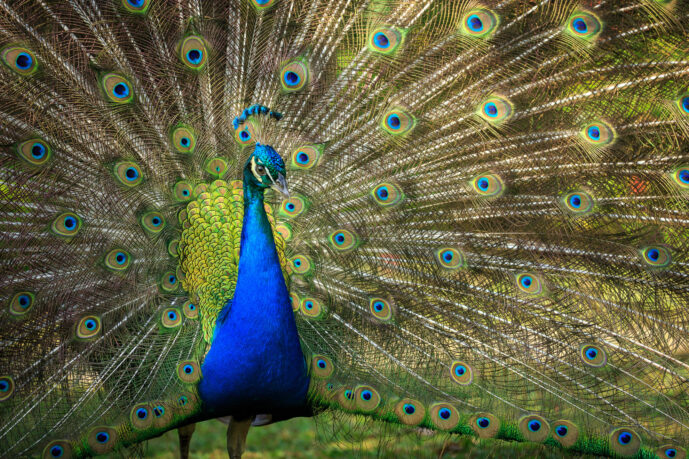
Quick Facts
- Scientific Name: Pavo cristatus
- Family: Phasianidae
- Known Nicknames: Indian Peafowl, Blue Peafowl, Peacock (males), Peahen (females)
- Average Length: 100–225 cm / 39–88 in (including male train)
- Average Weight: 2.75–6 kg / 6–13.2 lb
- Wingspan: 130–160 cm / 51–63 in
- Key Feature: Elongated iridescent upper tail coverts (train) featuring distinctive eyespots or ocelli
- Primary Diet: Omnivore (Seeds, insects, fruits, small mammals, and reptiles)
- Range: Native to the Indian subcontinent; widely introduced to Australia, New Zealand, and the Americas
- Habitat: Dry deciduous forests, scrublands, and agricultural areas near water sources
- Social Structure: Polygynous; typically found in small groups known as parties or musters
- Nesting/Breeding: Shallow scrapes on the ground hidden in dense undergrowth or thorny thickets
- Statut de conservation : Préoccupation mineure (LC)
- Population Trend: Stable
The Indian Peafowl (*Pavo cristatus*) is one of the world's most recognizable and flamboyant birds, celebrated for its breathtaking sexual dimorphism and majestic presence. While the female, or peahen, sports modest brown plumage to blend into the brush, the male peacock is a living masterpiece of iridescent blue and green feathers. His most iconic feature is an elongated "train" of tail coverts that can span over five feet in length, adorned with shimmering "eyespots" or ocelli designed to dazzle potential mates during elaborate courtship displays. Beyond their visual splendor, these ground-dwelling birds are known for their piercing, trumpet-like calls and a distinctive fan-shaped crest atop their heads, serving as both a national symbol of India and a timeless icon of natural beauty.
Habitats et répartition
Native to the Indian subcontinent, this species is naturally distributed across India, Sri Lanka, and parts of Pakistan and Nepal. It has also been widely introduced to many other regions globally, including North America, Europe, and Australia, where it often thrives in feral or semi-wild populations. These birds primarily inhabit open deciduous forests, scrublands, and wooded areas that provide easy access to water sources. They are remarkably adaptable and are frequently found near human settlements, utilizing agricultural lands and orchards for foraging while relying on tall trees for nocturnal roosting to avoid predators.
Comportements & Reproduction
These birds exhibit a polygynous social structure where a single male, or peacock, typically maintains a harem of several females. During the breeding season, males congregate in communal display areas known as leks to compete for female attention. The most iconic behavior involves the peacock fanning out his massive, iridescent train and vibrating the feathers to create a distinct rattling sound and shimmering visual effect. This elaborate courtship display is a primary driver of sexual selection, as peahens typically choose mates based on the size, symmetry, and quality of the male's plumage, which serve as indicators of genetic fitness. Once mating is successful, the peahen takes full responsibility for nesting and rearing the offspring. She selects a secluded, well-hidden spot on the ground amidst dense vegetation to scrape out a shallow nest. A clutch generally consists of four to eight eggs, which the female incubates for approximately 28 days. The precocial chicks are able to follow their mother and forage shortly after hatching, staying under her protection for several months until they achieve independence. Males do not participate in the incubation or the raising of the young, focusing instead on defending their display territory.
Alimentation
Peafowl, specifically the Indian Peafowl (Pavo cristatus), are opportunistic omnivores that maintain a diverse diet consisting of both plant matter and small animals. They primarily forage on the ground, scratching through soil and leaf litter to find seeds, grains, berries, and succulent fruits, but they are also highly skilled hunters of insects such as grasshoppers, crickets, and termites. One of the most fascinating aspects of their diet is their reputation as "snake eaters," as they are known to fearlessly attack and consume small venomous snakes, including young cobras, which makes them beneficial for pest control in their native habitats. To aid in the digestion of these varied food sources, peafowl frequently ingest small pebbles and grit, which help their gizzard grind down tough fibrous plants and hard-shelled seeds. Furthermore, their diet often fluctuates seasonally, shifting toward more protein-rich sources like frogs, lizards, and small rodents during the breeding season to support their increased energy requirements.
Couleurs
Male Indian peafowls feature iridescent blue necks and magnificent metallic green trains adorned with multicolored ocelli (eyespots) in shades of blue, gold, and bronze. In contrast, females possess muted brown and grey plumage with subtle green neck patches, providing cryptic camouflage for nesting in dense undergrowth. Both sexes display distinct white facial markings around the eyes, highlighting the stark sexual dimorphism between the male's ornamental display and the female's protective coloration.
Faits amusants
Beyond their flashy appearance, peafowl possess several remarkable traits, such as the fact that a peacock’s famous train is actually composed of elongated upper tail coverts rather than true tail feathers. When displaying, peacocks vibrate these feathers to create a low-frequency infrasound that is inaudible to humans but can be felt by other birds. Despite their heavy plumage, they are capable of flight and often roost high in trees at night to stay safe from ground predators. Additionally, these birds are surprisingly fierce protectors and skilled hunters, known for attacking and eating venomous snakes like cobras.