Rana Platanera de Ojos Pálidos
Boana pugnax
Quick Facts
- Scientific Name: Boana pugnax
- Family: Hylidae
- Known Nicknames: Chirp Treefrog, Rana Platanera, Pale-eyed Tree Frog
- Average Length: 6.2–8.0 cm / 2.4–3.1 in
- Average Weight: 15–25 g / 0.5–0.9 oz
- Wingspan: N/A
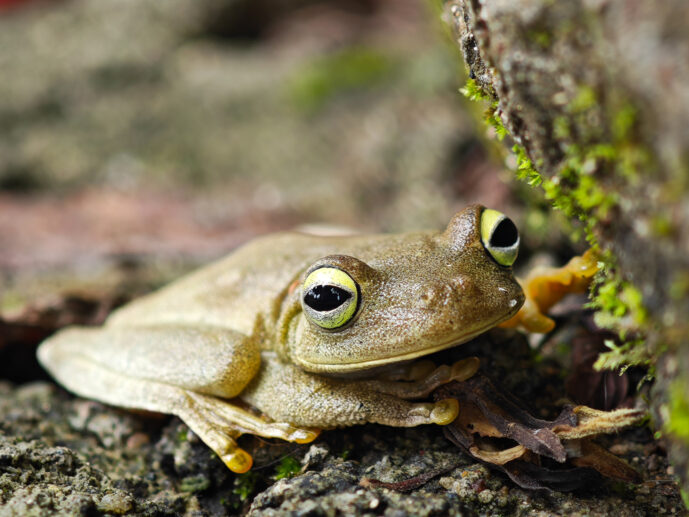
- Key Feature: Large, distinctive pale yellowish-white to grayish iris and a robust body
- Primary Diet: Insectivore
- Range: Panama, Colombia, and Venezuela
- Habitat: Lowland humid forests, savannas, and agricultural areas such as banana plantations
- Social Structure: Solitary, congregates during breeding season
- Nesting/Breeding: Shallow ponds, marshes, and slow-moving streams
- Statut de conservation : Préoccupation mineure (LC)
- Population Trend: Stable
The Rana Platanera de Ojos Pálidos (*Boana pugnax*), or Pale-eyed Treefrog, is a resilient and captivating amphibian native to the lowlands of Panama, Colombia, and Venezuela. True to its name, its most striking feature is its large, silvery-white or pale-grey eyes, which stand out vividly against a robust body typically colored in shades of tan, reddish-brown, or olive. Often adorned with dark, X-shaped markings or chevrons across its back for camouflage, this nocturnal climber is frequently found in disturbed habitats like banana plantations, where it navigates lush foliage using oversized, adhesive toe pads. Known for its loud, rhythmic croak that resonates through the humid night air, this "pugnacious" frog is as hardy as it is distinctive, perfectly adapted to thrive in both wild forests and agricultural landscapes.
Habitats et répartition
This species is primarily distributed across the lowlands of Panama and northern Colombia, extending through the Caribbean coastal plains and the Magdalena River valley. It is typically found at elevations below 700 meters above sea level, occupying a range of environments from humid tropical forests to more open, human-altered landscapes.
Its habitat includes grasslands, pastures, gardens, and agricultural areas such as banana and plantain plantations. It is strongly associated with stagnant or slow-moving water bodies, including ponds, marshes, and flooded ditches, where it perches on low vegetation near the water's edge to breed and forage.
Comportements & Reproduction
This species is primarily nocturnal and exhibits a territorial social structure during the breeding season. Males congregate in choruses near stagnant or slow-moving water bodies, such as ponds, ditches, and flooded pastures. They are known for their aggressive behavior, often engaging in physical combat or intensified vocal bouts to defend their calling sites from competing males. Outside of these breeding aggregations, they remain relatively solitary, frequently inhabiting banana plantations and other human-altered landscapes where they forage for insects.
Reproduction is triggered by rainfall, during which males produce loud, repetitive calls from low vegetation or the ground to attract mates. Once a pair forms through amplexus, the female deposits a gelatinous egg mass directly into the water or attaches it to submerged plants. The larvae develop into tadpoles within these temporary or permanent pools. This species' ability to utilize man-made drainage systems and disturbed environments as breeding grounds provides a significant reproductive advantage, allowing it to thrive in areas where more sensitive amphibians might struggle.
Alimentation
The diet of the Boana pugnax, commonly known as the Rana Platanera de Ojos Pálidos, is primarily insectivorous and opportunistic, consisting of a wide variety of small invertebrates. As a nocturnal predator, it actively hunts or waits to ambush prey such as beetles, flies, crickets, moths, and spiders. An interesting aspect of its feeding ecology is its significant role as a natural pest controller within its habitat; because it frequently inhabits banana and plantain plantations, it consumes many of the insects that typically plague these crops. These frogs utilize their sticky, muscular tongues to capture prey with high precision and speed. Furthermore, studies on their stomach contents have revealed that they are generalists, meaning their diet shifts based on the seasonal availability of different insect populations, which allows them to maintain a stable energy intake even in changing environments.
Couleurs
*Boana pugnax* features a dorsal coloration of tan, light brown, or grayish-brown, often marked with dark longitudinal stripes or mottling that provides effective camouflage against bark and dried leaves. A prominent dark stripe typically extends from the snout through the eye to the shoulder, contrasting with its hallmark pale, silvery or yellowish iris. Its ventral surface is usually cream or white, completing a cryptic appearance designed for blending into tropical vegetation.
Faits amusants
True to its name, this frog is remarkably feisty, with males engaging in physical wrestling matches to defend their territory using sharp, bony spines on their thumbs called prepollex. Beyond their combat skills, they are known for a call that sounds more like the rhythmic clicking of stones than a traditional croak. While many frogs shy away from humans, these "banana frogs" thrive in agricultural areas, often hitching rides across regions tucked inside fruit bunches. Their most striking feature remains their pale, almost silvery eyes, which lack the intense pigmentation seen in many of their tree-dwelling relatives.