Vermilion Cardinal
Cardinalis phoeniceus
Quick Facts
- Scientific Name: Cardinalis phoeniceus
- Family: Cardinalidae
- Known Nicknames: Venezuelan Cardinal
- Average Length: 19 cm / 7.5 in
- Average Weight: 20–30 g / 0.7–1.1 oz
- Wingspan: 25–30 cm / 10–12 in
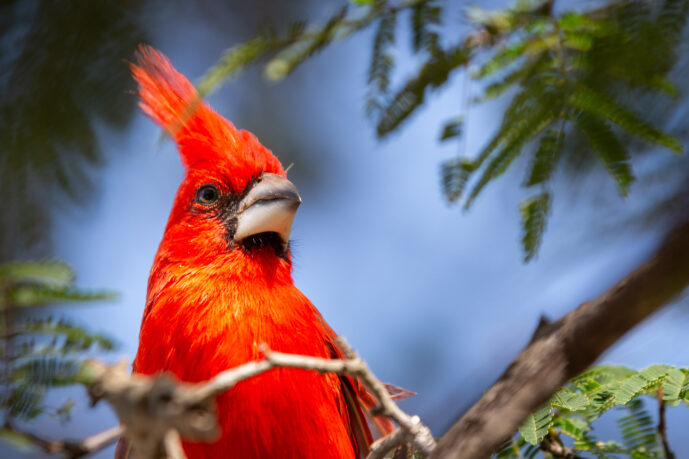
- Key Feature: Long, vertically erect, pointed crest and intense vermilion plumage in males
- Primary Diet: Omnivore (Seeds, fruits, and insects)
- Range: Arid coastal regions of northern Colombia and northern Venezuela
- Habitat: Subtropical or tropical dry shrubland and arid scrubland
- Social Structure: Solitary or in pairs
- Nesting/Breeding: Cup-shaped nests built in dense shrubs or cacti
- Statut de conservation : Préoccupation mineure (LC)
- Population Trend: Decreasing
The Vermilion Cardinal (*Cardinalis phoeniceus*) is a breathtaking songbird native to the arid scrublands of Colombia and Venezuela, renowned for its intense, fiery plumage and a uniquely tall, slender crest that stands nearly vertical. While the males are draped in a brilliant scarlet hue with a subtle black mask encircling their thick, pale beaks, the females offer a sophisticated contrast with their soft greyish-brown tones and delicate rosy highlights on the wings and tail. What truly distinguishes this species from its Northern relative is its "punk-rock" silhouette; the crest is exceptionally long and spiky, giving the bird a regal and perpetually alert appearance. A master of survival in sun-drenched, thorny environments, this desert gem is as resilient as it is beautiful, flashing like a streak of flame against the dusty landscape.
Habitats et répartition
This species is primarily restricted to the arid coastal regions of northern South America, specifically across northern Colombia and northern Venezuela. Its geographical range encompasses the Guajira Peninsula and extends along the Caribbean coastline, where it remains relatively localized within these dry corridors.
It inhabits open, xeric environments such as subtropical or tropical dry shrubland and arid scrub. These habitats are typically characterized by thorny vegetation, acacia trees, and various species of cacti. The bird is well-adapted to these desert-like conditions and is frequently observed foraging within coastal dunes and dense, prickly thickets.
Comportements & Reproduction
Primarily shy and territorial, these birds use their vibrant plumage and melodious songs to establish boundaries and attract mates within their arid scrubland habitats. During the breeding season, they typically form monogamous pairs, with males becoming highly defensive of their nesting sites. Outside of the mating period, they are generally solitary or found in small family groups, foraging through dense, xerophytic vegetation for seeds and insects.
The female takes the lead in reproduction by constructing a sturdy, cup-shaped nest well-hidden among thorny bushes or cacti to deter predators. She typically lays a clutch of two to four eggs and handles the majority of the incubation. Once the chicks hatch, both parents share the responsibility of feeding them, a collaborative strategy that increases the survival rate of the brood in harsh environments. This biparental care continues until the fledglings are capable of independent foraging.
Alimentation
The Vermilion Cardinal maintains a primarily omnivorous diet, consisting of a diverse mix of seeds, small fruits, and insects. It frequently forages on or near the ground, searching through scrubby vegetation for beetles, grasshoppers, and caterpillars, which are particularly vital sources of protein during the breeding season to ensure the healthy development of nestlings. An interesting aspect of their feeding behavior is their reliance on the seasonal availability of desert and scrubland resources; during drier periods, they pivot more heavily toward succulent fruits and berries to meet both their nutritional and hydration needs. Their stout, conical beaks are perfectly adapted for cracking tough seed hulls, allowing them to exploit a wide variety of plant species within their arid habitats in Colombia and Venezuela.
Couleurs
The male Vermilion Cardinal is characterized by its brilliant, uniform rosy-red plumage and an exceptionally long, upright crest that tapers to a fine point. A small, dark mask surrounds its heavy beak, while the female exhibits a more cryptic sandy-gray or buff coloration with subtle reddish tints on the wings and tail for camouflage. This species is distinguished by its intense saturation of red, which is more vivid than that of its relatives, serving as a bold social signal within its arid scrub habitat.
Faits amusants
The Vermilion Cardinal sports an exceptionally long, needle-like crest that it snaps into a vertical position, creating a dramatic "Mohawk" silhouette much sharper than its northern relatives. This species is a specialist of arid, thorny scrublands, where it has developed the quirky habit of "stealth singing"—belting out complex melodies from the deepest parts of prickly thickets to remain hidden while defending its territory. Despite their neon-red plumage, these birds are surprisingly elusive, often darting through dense cacti and brush with high-speed agility to navigate their harsh, sun-drenched habitats.