Where to see monkeys in Colombia?
Discover the best spots to see monkeys in Colombia, from the Amazon jungle to the coastal forests of Tayrona.
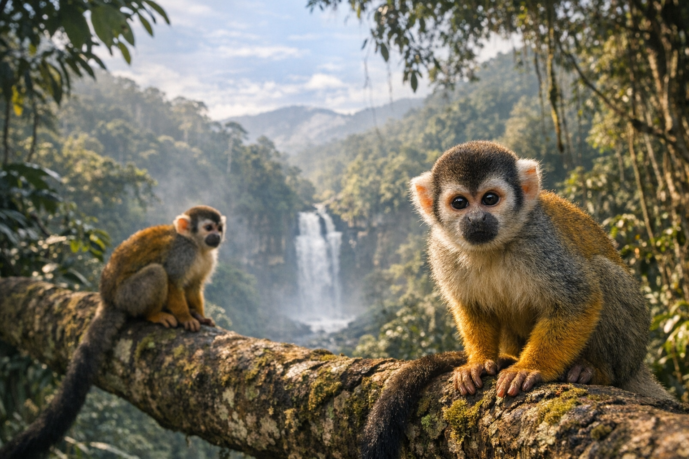
Colombia is a premier primate biodiversity hotspot, home to an incredible variety of species ranging from tiny marmosets to iconic howler monkeys. For wildlife enthusiasts and nature photographers, knowing exactly where to venture is the first step toward a successful jungle adventure.
In this guide, we reveal the best locations where to see monkeys in Colombia, from the deep canopies of the Amazon Rainforest to the coastal forests of the Caribbean Coast. We will provide you with the essential insights needed to spot these fascinating primates in their natural habitat, ensuring your next trip is both immersive and unforgettable.
Essentiels
Le bassin de l'Amazone : épicentre de la diversité des primates
For the traveler truly dedicated to wildlife observation, there is no substitute for the Colombian Amazon. This region represents the heart of the country’s primate biodiversity, offering the highest probability of encountering multiple species in their natural habitat. Reaching this remote wilderness requires a flight to the frontier city of Leticia, followed by river travel, but the reward is an unparalleled immersion into a world teeming with life.
Parc national naturel d'Amacayacu
Deep within the Amazon, Amacayacu is a vast protected area where the forest canopy is alive with movement. It is a sanctuary for a remarkable array of primates, making it a primary destination for serious wildlife enthusiasts.
Species to spot:
- Woolly monkey: Often seen moving slowly and deliberately through the high canopy.
- Squirrel monkey: Small, energetic monkeys that travel in large, noisy troops.
- Capuchin monkey: Intelligent and curious, frequently observed foraging in the mid-canopy.
- Saddleback tamarin: A small tamarin with distinct markings, often seen in family groups.
- Pygmy marmoset: The world’s smallest monkey, a true challenge to spot. Look for them on tree trunks near riverbanks.
Comment s'y rendre :
The park is only accessible by water. From Leticia, it is a scenic two-hour boat journey up the Amazon River. Most tours and lodges will arrange this transport for you.
Viewing tips:
To maximize your experience, consider staying at the park’s official visitor center lodge or booking a multi-day tour that includes jungle hikes. A local guide is indispensable here; their trained eyes and ears can distinguish the subtle rustle of leaves or a faint call that signals the presence of well-camouflaged species like the pygmy marmoset.
Puerto Nariño & Tarapoto Lake
Puerto Nariño offers a different kind of Amazon experience. This tranquil, pedestrian-only town is a model for sustainable, community-based tourism. Here, wildlife viewing is woven into the fabric of daily life and local culture, providing a more intimate connection with the rainforest.
Species to spot:
Squirrel monkeys are particularly abundant and frequently seen in and around the town’s jungle perimeter. Their chattering and swift movements through the trees are a common sight. With a good guide, you may also encounter the more elusive friar monkey (saki) or go on a night walk to search for the large-eyed night monkey.
Unique experience:
Monkey spotting is often part of a broader jungle exploration. A guided walk might be led by a member of an indigenous community, who can share knowledge about medicinal plants as you search for primates. Boat tours on the nearby Tarapoto Lake combine the search for monkeys in the flooded forest with the magical experience of spotting pink river dolphins.
Viewing tips:
Engage a local guide for a walk into the surrounding forest; they know the territories of different monkey troops. Early morning boat excursions on the lake are highly recommended. As the mist lifts, monkeys are often most active along the water’s edge, foraging for breakfast in the trees that line the banks.
Côte caraïbe : singes dans les forêts côtières et de montagne
For many travelers, the Caribbean coast is a primary destination, and fortunately, you don’t have to venture deep into the Amazon to see Colombia’s primates. The coastal and mountain forests here offer some of the most accessible monkey-spotting opportunities in the country, easily combined with a visit to the region’s famous beaches or the cool mountain air of the Sierra Nevada.
Parc naturel national de Tayrona
Where the jungle meets the turquoise sea, Tayrona is not only a destination for stunning beaches but also a sanctuary for diverse wildlife. The park’s tropical dry forests are home to several primate species, making a hike through its trails a dynamic experience.
Species to spot: The most common residents are the Red howler monkey and the clever white-fronted capuchin. With great luck and a keen eye, you might also glimpse the critically endangered cotton-top tamarin, a tiny primate with a striking white crest.
Where to look: Howler monkeys and capuchins are frequently seen along the main trail that runs from the El Zaino entrance towards the popular beaches of Arrecifes and Cabo San Juan. The cotton-top tamarins are far more elusive and prefer the quieter, drier forest sections of the park, away from the main foot traffic.
- Viewing tips: The deep, resonant call of the howler monkey is often your first clue to their presence. Listen for their roars echoing through the forest, particularly around sunrise and sunset. Be mindful of the capuchins; they are notoriously bold and will investigate unattended bags for food. Always keep your belongings secured.
Minca & la Sierra Nevada de Santa Marta
Nestled in the foothills of the world’s highest coastal mountain range, the town of Minca and its surrounding cloud forests provide a cooler, more tranquil setting for wildlife observation. The area is a haven for birds, but its resident primates are a major highlight for visitors exploring the network of trails and coffee farms.
Species to spot: The Red howler monkey and the white-fronted capuchin are the two primate species you are likely to encounter in the forested hills around Minca.
How to see them: The best way to find monkeys is to take a guided nature hike into the forest. Many of the eco-lodges and organic coffee fincas (farms) in the area have resident troops that can often be seen or heard directly from the property grounds.
- Viewing tips: Consider staying at a lodge with extensive forested grounds to maximize your chances. Monkeys are most active in the early morning hours, so an early start is recommended. Often, a tour focused on Minca’s spectacular birdlife will lead to excellent monkey sightings as well.
The Coffee Axis (Eje Cafetero): High-Altitude Primates
While Colombia’s Coffee Axis is celebrated for its verdant landscapes and world-class coffee fincas, the high-altitude cloud forests that blanket its mountains offer their own subtle rewards. Monkey sightings here are a special addition to the primary experience of coffee tours and scenic hikes, providing a glimpse into the region’s rich biodiversity. It’s an opportunity to complement the aroma of fresh coffee with the wild calls of the forest.
Sanctuaire de faune et de flore Otún Quimbaya
Nestled in the central Andes near Pereira, the Otún Quimbaya Flora and Fauna Sanctuary is a beautifully preserved haven of subtropical forest. It is arguably the most accessible and well-organized location in the region to encounter primates. The main attraction is the impressive Colombian red howler monkey, whose booming calls often serve as the first sign of their presence.
- Species to spot: The Colombian red howler monkey is the star primate of the sanctuary.
- How to see them: The reserve features a network of well-maintained trails that you can explore. To greatly improve your chances of a sighting, consider joining a guided walk with a local expert who knows the monkeys’ habits and territories.
- Viewing tips: The most magical moments often occur at dawn or dusk when the howlers’ deep, resonant calls echo through the valleys. Patience is key; find a quiet spot along the trail and simply listen.
Réserve naturelle de Rio Blanco
Located just outside Manizales, the Rio Blanco Nature Reserve is internationally acclaimed as a premier destination for birdwatching. However, its lush, protected forests are also home to troops of red howler monkeys and the occasional white-faced capuchin. A visit here is a structured experience, as access to the reserve is only permitted with an official guide.
- Species to spot: Red howler monkeys are the most common primates, though white-faced capuchins also inhabit the reserve.
- How to see them: As a protected watershed, entry requires a pre-booked, guided tour. While the focus is often on rare birds, the guides are knowledgeable about all the reserve’s inhabitants.
- Viewing tips: It is essential to book your tour in advance. When you do, mention your specific interest in seeing monkeys. This allows the guide to tailor the route and focus their attention on spotting primates as well as the famed avian species.
A Quick Guide to Common Colombian Monkeys
Colombia is home to an astonishing diversity of primates, with over 30 species calling its forests home. While spotting some of the rarer ones requires dedicated expeditions, several charismatic species are commonly seen by travelers. Here’s a brief introduction to some of the monkeys you’re most likely to encounter on your journey.
Singe hurleur (Mono Aullador)
You will almost certainly hear a howler monkey before you see one. Their deep, guttural roar is one of the loudest sounds in the animal kingdom, a territorial call that can travel for several kilometers through the dense jungle canopy. These are large, stocky primates, typically covered in reddish-brown or black fur. Despite their intimidating call, they are quite placid, spending much of their day resting high in the trees and feeding on leaves. Listen for their chorus, which is most prominent at dawn and dusk.
Singe capucin (Mono Maicero / Cariblanco)
Known for their remarkable intelligence and complex social structures, capuchin monkeys are a delight to observe. They are easily identified by the distinctive black or brown fur “cap” on their heads, which often contrasts with a white face and chest. Capuchins are incredibly active and curious, often traveling in large, noisy groups as they forage for fruits, insects, and small vertebrates. Their inquisitive nature means you should always keep a close watch on your belongings, particularly in well-visited areas like Tayrona Park.
Singe-écureuil (Mono Ardilla)
Small, slender, and incredibly agile, the squirrel monkey moves through the forest with breathtaking speed. Their olive-colored fur, long non-prehensile tail, and a charming white “mask” of fur around their eyes make them easy to identify. You will rarely see a squirrel monkey alone; they live in large, energetic troops that can number 50 or more individuals, creating a flurry of activity as they leap through the lower and middle canopy in search of food.
Tamarin pinché (Tití Cabeciblanco)
The cotton-top tamarin is one of Colombia’s most iconic and precious primates. This small monkey is immediately recognizable by its punk-rock crest of long, flowing white hair that extends from its forehead down to its shoulders. Sadly, this beautiful animal is critically endangered and found only in a small pocket of tropical forest in northwestern Colombia. Seeing a cotton-top tamarin in the wild is a rare and unforgettable privilege, highlighting the importance of conservation efforts in the region.
Directives pour l'observation responsable des singes
Observing monkeys in their natural habitat is an unforgettable privilege. To ensure these encounters remain positive for both you and the animals, it’s essential to follow a few key principles of responsible wildlife viewing. Adhering to these guidelines helps protect Colombia’s primate populations and preserves the wildness of their environment for future generations.
Gardez vos distances
The most profound wildlife encounters happen when animals are undisturbed and behaving naturally. Maintaining a respectful distance is the cornerstone of ethical viewing. This not only prevents stress for the monkeys but also ensures your own safety, as wild animals can be unpredictable when they feel threatened.
- Use binoculars or a camera with a zoom lens to get a closer look without intruding on their space.
- Never follow or chase monkeys. Allow them to move freely and at their own pace. If they move away, it is a sign to let them be.
- Remember that this is for their safety and yours. A frightened or cornered animal may act defensively.
Do Not Feed the Monkeys
While the temptation to offer a snack can be strong, feeding wild monkeys has severe and lasting consequences. It disrupts their natural foraging behaviors and can lead to serious health and behavioral problems. The adage “a fed bear is a dead bear” applies equally to primates.
- Human food is not part of a monkey’s natural diet and can cause serious, sometimes fatal, digestive issues.
- Feeding creates dependency, teaching monkeys to associate humans with food. This can lead to aggressive behavior, such as snatching bags or food when they are not offered any.
- In popular areas like Tayrona National Park, it is crucial to keep all food items securely sealed and stored inside your backpack to avoid attracting unwanted attention.
Engagez un guide local certifié
Exploring with a local guide is one of the best investments you can make. Their trained eyes can spot animals you would easily miss, and their knowledge transforms a simple walk into a rich educational experience. Furthermore, it directly benefits the local economy and conservation initiatives.
- Guides are skilled at locating wildlife ethically, without causing disturbance.
- They can offer fascinating insights into monkey behavior, social structures, and their role within the broader ecosystem.
- Your fee provides a sustainable livelihood for community members, giving them a direct stake in protecting their natural heritage.
Be Quiet on the Trails
The sounds of the jungle are part of the experience, and adding your own loud noises will only detract from it. Most wild animals, including monkeys, are wary of loud or unfamiliar sounds and will retreat long before you ever see them. Silence and patience are your greatest assets.
- Loud conversations, music, and sudden movements will easily scare wildlife away, diminishing your chances of a sighting.
- Walk softly and speak in low tones, if at all. This allows you to better hear the sounds of the forest—like the rustling of leaves or a distant call—that might signal the presence of monkeys.