Tatacoa Desert
A surreal landscape of red and gray canyons, the Tatacoa Desert near San Agustin offers stargazing, hiking, and otherworldly vistas in Colombia's Huila Department—a hidden gem for adventurers and nature lovers.
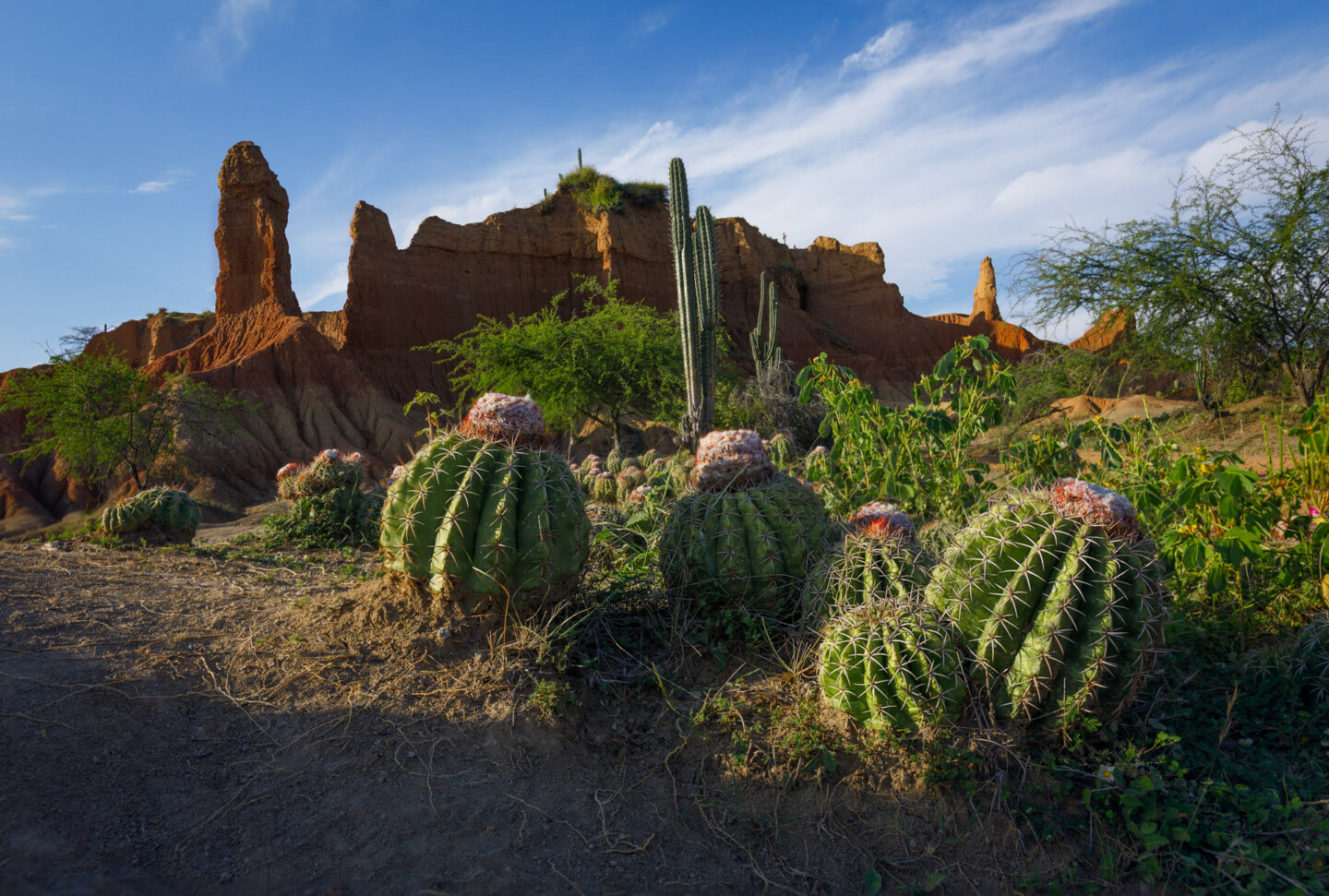
Beneath Colombia’s Andean skies, the Tatacoa Desert unfolds as a surreal canvas of rust-red canyons and ash-gray valleys. Far from a barren wasteland, this otherworldly landscape invites wanderers to stargaze in its crystalline nights, trace fossil-laden trails, and lose themselves in the silence of its labyrinthine erosions—a quiet masterpiece of nature’s patient hand.
Destination Facts
- Official Name: Desierto de la Tatacoa (formal name in Spanish)
- Type of Destination: Arid region / Natural landscape
- Brief Description: A striking, otherworldly expanse of eroded red and gray canyons, sparse vegetation, and star-filled skies, often mistaken for a true desert despite its tropical dry forest ecosystem.
- Location: Near the town of Villavieja, in the Huila Department of Colombia’s Andean Region.
- Year Established/Founded: N/A (naturally formed)
- Governing Body/Management: Managed locally, with some areas under conservation efforts by regional authorities.
- Significance/Known For: Unique geological formations, exceptional stargazing conditions due to minimal light pollution, and fossil deposits from the Miocene epoch.
- Size/Area: Approximately 330 square kilometers.
- Population: N/A (uninhabited, though nearby Villavieja serves as a gateway)
- Main Attractions/Key Features:
- El Cuzco (red-hued badlands)
- Los Hoyos (gray sedimentary formations)
- Tatacoa Astronomical Observatory
- Best Time to Visit: Dry season (June–September, December–February) for easier exploration; nights are clear year-round.
- Entrance Fee/Ticket Info: Free access to most areas; observatory visits may require a small fee.
- Operating Hours: Open 24/7; observatory tours typically run at night.
- Website: N/A (no single official site; local tourism offices provide updates)
Essentials
- Best Months to Visit: December, February, January, November
History
History of the Tatacoa Desert
The Tatacoa Desert, a striking arid landscape in Colombia’s Huila Department, is not a true desert but a tropical dry forest transformed by millennia of erosion. Its name, derived from the Spanish word for rattlesnake (tátaco), hints at its rugged beauty and the myths surrounding its origins. Once a lush region during the Tertiary period, climatic shifts and geological forces sculpted its distinctive red and gray canyons, creating a surreal terrain that captivates travelers today.
Human interaction with Tatacoa dates back to pre-Columbian times, when indigenous groups like the Pijao and Yariguí traversed its harsh terrain. Spanish conquistadors later explored the area, though its inhospitable conditions deterred permanent settlement. In the colonial era, Tatacoa became a refuge for outlaws and a silent witness to the region’s turbulent history. Today, its otherworldly landscapes and clear night skies make it a destination for astronomers and adventurers alike.
Key Historical Dates
- Pre-1500s: Inhabited by indigenous groups such as the Pijao, who used the area for hunting and ritual purposes.
- 1538: Spanish conquistador Gonzalo Jiménez de Quesada reportedly passed near Tatacoa during his search for El Dorado, though the desert itself remained largely unexplored.
- 18th century: The region gained notoriety as a hideout for bandits and rebels during Colombia’s colonial struggles.
- 20th century: Scientific interest grew as geologists and paleontologists uncovered fossils, revealing Tatacoa’s ancient marine and forest ecosystems.
- 2000s: Recognized as a prime stargazing destination due to minimal light pollution, attracting astronomers and eco-tourists.
Tours and Day Trips
Exploring the Martian Landscapes of Tatacoa
The Tatacoa Desert, with its ochre-hued canyons and star-studded skies, offers a surreal escape into Colombia’s arid heart. Below are excursions that reveal its geological wonders and celestial spectacles.
1. The Red Desert & Grey Desert Trek
A guided walk through the two contrasting zones of Tatacoa—Los Hoyos (Red Desert) and Cuzco (Grey Desert)—unfolds like a journey across another planet. Expect labyrinthine gullies, fossil beds, and the occasional sighting of desert wildlife. The 3-hour trek is ideal for nature enthusiasts and photographers.
2. Astronomical Observation at Tatacoa Observatory
By day, the desert’s vastness astounds; by night, its skies mesmerize. The Tatacoa Observatory offers evening sessions with telescopes, where visitors decipher constellations and planets under the guidance of local astronomers. A 2-hour activity, perfect for stargazers and families.
3. Swimming in Natural Pools of Villavieja
A short 30-minute drive from Tatacoa, the village of Villavieja provides respite in its shaded natural pools, fed by the Magdalena River. Combine this with a visit to the Paleontological Museum, home to prehistoric fossils excavated from the desert. Suits families and those seeking a leisurely half-day escape.
4. Horseback Riding at Sunset
Local guides lead riders through the desert’s winding paths as the fading light paints the landscape in gold and crimson. A 1.5-hour excursion, best for adventure seekers and romantics alike.
5. Fossil Hunting in the Dry Riverbeds
The desert’s ancient riverbeds conceal marine fossils, remnants of when this was an ocean floor. A specialist-guided 2-hour tour teaches participants to identify and appreciate these relics. Tailored for history buffs and curious minds.
When to visit
Best Time to Visit Tatacoa Desert
The Tatacoa Desert, a striking semi-arid region in Colombia’s Huila Department, offers a unique landscape of ochre-hued canyons and star-filled skies. Its climate is characterized by distinct dry and wet seasons, each lending a different character to the desert. Below is a seasonal breakdown to help you plan your visit.
Dry Season (June–September & December–February)
During these months, the desert experiences minimal rainfall, with daytime temperatures ranging from 30°C to 38°C and cooler nights dropping to 18°C to 22°C. The arid conditions make exploration more comfortable, though the midday sun can be intense.
- Pros: Ideal for hiking and stargazing, as clear skies prevail. Fewer mosquitoes and mud, making trails more accessible.
- Cons: Peak tourist months (especially December–January) may bring crowds. Accommodations can fill quickly.
- Events: The Festival de Astronomía in August attracts astronomy enthusiasts with telescope workshops and night-sky observations.
Wet Season (March–May & October–November)
Rainfall increases, particularly in April and October, though showers are typically brief. Temperatures remain warm (28°C to 34°C), with higher humidity.
- Pros: Lush greenery contrasts beautifully with the desert’s red and gray hues. Fewer visitors mean a more tranquil experience.
- Cons: Trails may become muddy, and some areas less accessible. Mosquito activity rises after rains.
- Events: Local religious festivals, such as Semana Santa (Holy Week), bring cultural vibrancy to nearby towns like Neiva.
Overall Recommendation
The dry months of June–September are optimal for those seeking clear skies and comfortable exploration. For solitude and a greener landscape, the shoulder months of May or November offer a compelling alternative. Avoid peak holiday periods (December–January) if you prefer fewer crowds.
Considerations
Prices for accommodations and tours rise during the dry season, particularly around festivals. Off-peak visits may yield better rates, though some services could operate with reduced hours. Always check local conditions, as unexpected rains can occasionally disrupt plans even in drier months.
What to pack
Essentials for the Tatacoa Desert
The Tatacoa Desert, though not a true desert but a semi-arid zone, demands thoughtful packing to navigate its rugged terrain, intense sun, and dramatic temperature shifts between day and night.
- Lightweight, Long-Sleeved Clothing: Protects against the relentless sun while allowing breathability in the heat.
- Sturdy Hiking Shoes or Boots: Essential for traversing the uneven, rocky paths and avoiding scorpion stings.
- Wide-Brimmed Hat & Sunglasses: Shields from the sun’s glare, which reflects off the ochre and gray landscapes.
- High-SPF Sunscreen & Lip Balm: The arid climate and strong UV exposure require frequent reapplication.
- Reusable Water Bottle with Insulation: Hydration is critical; daytime temperatures soar, and insulated bottles keep water cool.
- Headlamp or Flashlight: For night walks or stargazing—Tatacoa’s clear skies are legendary, but paths are unlit.
- Light Jacket or Shawl: Evenings can be surprisingly cool, especially after scorching days.
- Camera with Extra Batteries: The surreal landscapes—red canyons, star-filled skies—are unforgettable.
For the Intrepid Explorer
- Bandana or Buff: Useful for dust protection during windy periods.
- Small Backpack: For carrying essentials during daytime hikes without weighing you down.
Culture
A Landscape Shaped by Time and Silence
The Tatacoa Desert, though not a true desert but a dry tropical forest, carries an air of quiet mystique. Its ochre and gray canyons, sculpted by millennia of erosion, evoke a sense of timelessness. Locals speak of the land as if it were a living entity—stories of La Candelaria, a ghost town swallowed by the earth, or the whispers of wind through the Laberintos del Cusco, lend the place an almost mythic quality. Visitors often find themselves drawn to this solitude, where the absence of urban noise amplifies the rustle of dry leaves and the occasional call of a roadrunner.
Astronomy and Ancestral Wisdom
Far from city lights, Tatacoa’s night skies are a celestial spectacle. The local community, deeply connected to this natural planetarium, blends ancestral knowledge with modern astronomy. Guides—often farmers by day—point out constellations with the same ease as they recount indigenous Muisca and Pijao legends about the stars. The Observatorio Astronómico de la Tatacoa is not just a scientific outpost but a cultural bridge, where visitors learn how the desert’s clarity of air has made it a sacred site for stargazing since pre-Columbian times.
Stargazing Etiquette
- Respect the silence: Conversations are hushed, as if in a chapel.
- Follow local guides’ cues: They often share stories tied to specific celestial events.
- Dress warmly: Nights are cool, and the desert rewards those who linger.
Culinary Simplicity, Earthy Flavors
Food here is a testament to resilience. With scarce water, dishes rely on hardy ingredients: arepas de maíz pelao (corn cakes from a native maize variety), cabrito (slow-roasted goat), and aguapanela (unrefined cane sugar drink) are staples. Meals are often shared under the shade of a trupillo tree, with locals insisting visitors try hormigas culonas (toasted ants), a protein-rich snack tied to indigenous traditions. The desert’s harshness has forged a cuisine that is humble yet deeply flavorful.
Festivals of Light and Dust
Unlike Colombia’s vibrant carnivals, Tatacoa’s celebrations are intimate. The Festival de Astronomía (August) transforms the desert into an open-air classroom, with workshops led by astronomers and elders. During Semana Santa, processions wind through the canyons, their chants echoing off the rocks—a fusion of Catholic and indigenous reverence for the land. These events reveal a community that cherishes both science and spirituality, woven into the fabric of the desert.
Artisan Craft: Echoes of the Earth
Local artisans work with what the land provides. Handwoven baskets from cabuya (agave fibers) and pottery tinted with desert minerals reflect the palette of Tatacoa itself. These crafts are rarely sold in markets; instead, travelers might encounter them in village homes, where creators explain how each piece carries the imprint of the desert’s colors—rust red, ashen gray, and the faint green of resilient shrubs.
A Note on Respect
The desert’s beauty is fragile. Visitors are gently reminded to tread lightly: no litter, no off-path hiking, and always a willingness to listen. As one local proverb goes, “El desierto no se doma, se aprende” (“The desert is not tamed, it is learned”). This ethos permeates every interaction, inviting travelers to move slowly, observe deeply, and leave only footprints in the dust.