Villa de Leyva
A charming colonial gem in Boyacá, Villa de Leyva dazzles with its cobbled streets, vast Plaza Mayor, and nearby wonders like Moniquira Archaeological Park, El Infiernito, and the mystical Oceta Moor.
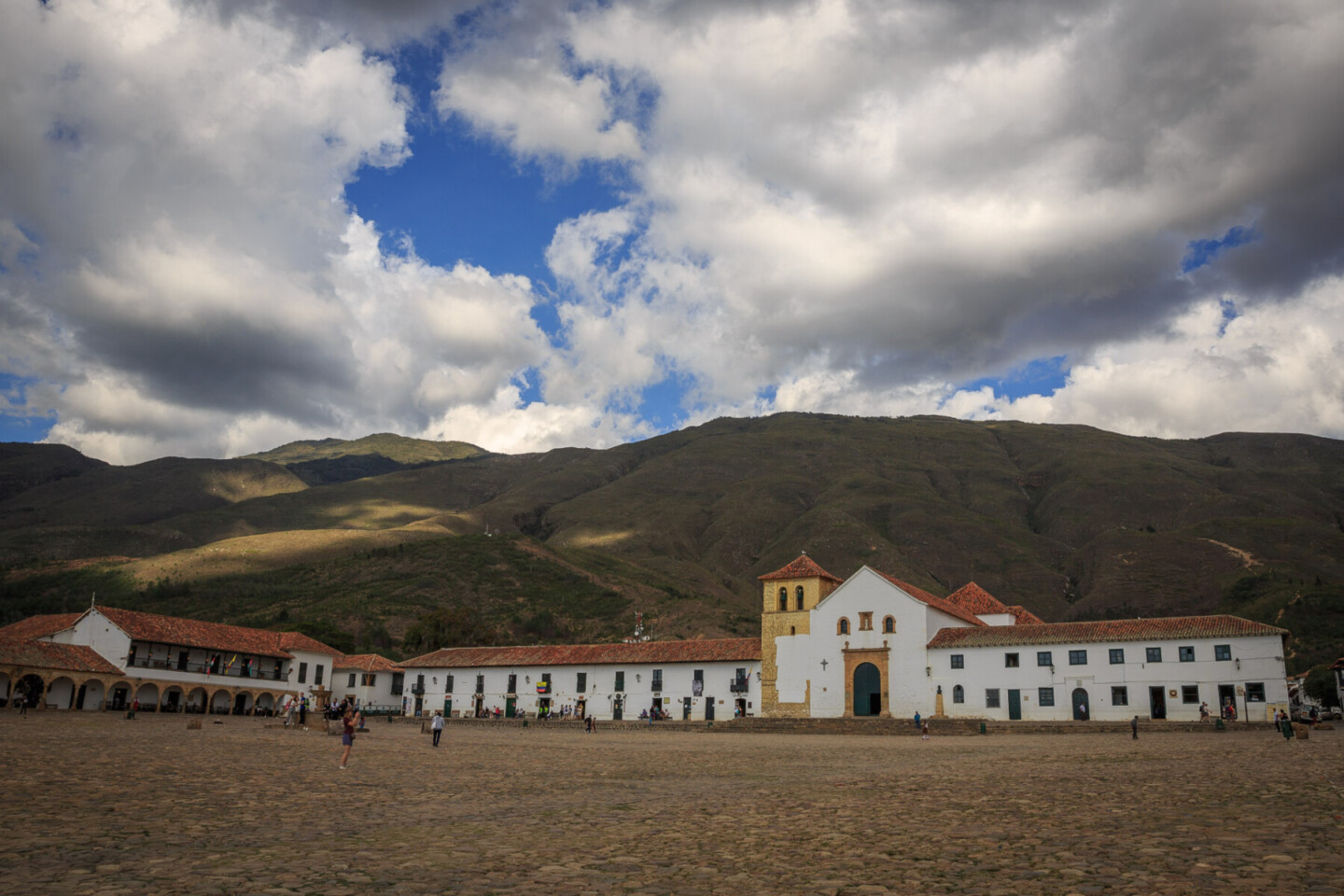
Step into Villa de Leyva, a timeless colonial jewel nestled in Colombia's Andean highlands. Cobblestone streets wind past whitewashed facades and sprawling plazas, whispering tales of the 16th century. Framed by rugged mountains and fertile valleys, this tranquil town invites wanderers to savor its unhurried pace, artisan workshops, and the stark beauty of the surrounding Iguaqué Sanctuary.
Destination Facts
- Official Name: Villa de Nuestra Señora Santa María de Leyva
- Type of Destination: Town
- Brief Description: A charming colonial town with cobblestone streets and whitewashed buildings, known for its well-preserved architecture and tranquil atmosphere.
- Location: Andean Region of Colombia, within the Boyacá Department, near the Iguaqué Sanctuary and Sierra Nevada del Cocuy.
- Year Established/Founded: 1572
- Governing Body/Management: Municipal Council of Villa de Leyva
- Significance/Known For: A National Monument of Colombia, recognized for its colonial heritage and as a filming location for historical dramas.
- Size/Area: Approximately 128 square kilometers
- Population: Around 16,000 inhabitants
- Main Attractions/Key Features:
- Plaza Mayor, one of the largest town squares in South America
- Paleontological Museum, showcasing fossils from the region
- Iguaque Flora and Fauna Sanctuary, a protected cloud forest
- Best Time to Visit: Dry season (December to February and July to August) for pleasant weather and clear skies.
- Entrance Fee/Ticket Info: Free to explore the town; some attractions like museums may charge a small fee.
- Operating Hours: Most shops and restaurants open daily; museums and parks may have specific hours.
- Website: Official Villa de Leyva Tourism
Essentials
- Top Attractions: Moniquira Archaeological Park, El infiernito, Sierra Nevada Del Cocuy, Iguaqué Sanctuary, Oceta Moor
- Best Months to Visit: December, February, January, November
History
History of Villa de Leyva
Nestled in the Andean highlands of Colombia, Villa de Leyva is a colonial gem that has preserved its 16th-century charm with remarkable authenticity. Founded in 1572 by Spanish conquistadors, the town was named after Andrés Díaz Venero de Leyva, the first president of the New Kingdom of Granada. Its cobblestone streets, whitewashed buildings, and expansive central plaza—one of the largest in South America—speak to its historical significance as a strategic and administrative hub during the colonial era. Over the centuries, Villa de Leyva evolved into a quiet retreat for artists, intellectuals, and travelers drawn to its timeless beauty and serene atmosphere.
The town's history is also intertwined with the indigenous Muisca civilization, who inhabited the region long before Spanish arrival. Nearby archaeological sites, such as El Infiernito, reveal pre-Columbian astronomical and ceremonial practices. Today, Villa de Leyva is a living museum of colonial architecture and a gateway to the natural wonders of the Iguaqué Sanctuary, where the Muisca believed the goddess Bachué emerged to create humanity.
Key Historical Dates
- 1572: Villa de Leyva is officially founded by Hernán Suárez de Villalobos under the orders of Andrés Díaz Venero de Leyva, serving as a colonial administrative center.
- 1812: The town becomes a focal point during the Colombian War of Independence, hosting key political meetings and serving as a refuge for revolutionary figures.
- 1954: Declared a National Monument by the Colombian government, ensuring the preservation of its colonial architecture and historical integrity.
- 2004: Recognized as part of the "Pueblos Patrimonio" (Heritage Towns) network, cementing its status as a cultural and historical treasure of Colombia.
Colonial Legacy
The town's architectural harmony—unchanged for centuries—reflects its Spanish colonial roots. The Church of Our Lady of the Rosary, completed in 1604, stands as a testament to the religious and cultural influence of the era. Villa de Leyva's plaza, devoid of modern intrusions, remains a rare example of unaltered colonial urban planning.
Indigenous Roots
Before Spanish colonization, the Muisca people thrived in the region, leaving behind petroglyphs and stone monoliths at sites like El Infiernito. These remnants offer a glimpse into their sophisticated understanding of astronomy and spirituality, adding depth to Villa de Leyva's historical narrative.
Tours and Day Trips
Popular Tours & Day Trips from Villa de Leyva
1. Iguaque Flora and Fauna Sanctuary
A journey into the mystical cloud forests of the Iguaque Sanctuary, a sacred site for the Muisca people, who believed it was the birthplace of humanity. The hike to the Laguna de Iguaque, a glacial lake at 3,800 meters, takes about 4–5 hours round-trip. Ideal for nature lovers and those seeking tranquility, the trail winds through lush vegetation and offers glimpses of endemic birds. The sanctuary is a 30-minute drive from Villa de Leyva.
2. Ráquira: The Pottery Village
A short drive (45 minutes) from Villa de Leyva, Ráquira is a vibrant village renowned for its artisanal pottery. Stroll through streets lined with colorful workshops where craftsmen shape clay into traditional wares. The town’s central square, adorned with whimsical sculptures, is perfect for picking up unique souvenirs. This excursion appeals to culture enthusiasts and families alike.
3. Pozos Azules
These striking turquoise-blue pools, Pozos Azules, are a surreal contrast to the arid landscape surrounding Villa de Leyva. Formed by mineral-rich waters, the pools are a photographer’s dream. A leisurely 15-minute drive from town, the site is accessible for all travelers, though swimming is no longer permitted. Visit at sunset for the most dramatic lighting.
4. Fossil Hunting in El Fósil
Villa de Leyva’s prehistoric past comes alive at El Fósil, where a perfectly preserved Kronosaurus skeleton is displayed. The small museum nearby explains the region’s paleontological significance. Just 5 kilometers from the town center, this stop is fascinating for history buffs and families with curious children. Combine it with a visit to the nearby Paleontological Research Center for deeper insights.
5. Cueva de la Fábrica & Cascada La Periquera
An adventure for the intrepid: a hike to Cueva de la Fábrica, a cave system with a hidden waterfall (Cascada La Periquera). The trail, about 2 hours round-trip, crosses streams and offers rewarding views. The cave’s cool interior and the waterfall’s refreshing spray make it a delightful escape. Suitable for those comfortable with moderate physical activity, located 20 minutes by car from Villa de Leyva.
6. Vineyard Tour at Bodegas del Marquéz
Colombia’s high-altitude wines thrive in the Boyacá region. A visit to Bodegas del Marquéz, a boutique vineyard 10 minutes from town, includes a tour of the vines and a tasting of their crisp whites and fruity reds. The setting, with views of the Andes, adds to the charm. Perfect for oenophiles or those seeking a leisurely afternoon.
When to visit
Best Time to Visit Villa de Leyva
Seasonal Breakdown
Villa de Leyva, nestled in the Andean highlands of Colombia, experiences a temperate climate with distinct dry and wet seasons rather than traditional four-season cycles. Its elevation (2,143 meters above sea level) ensures mild temperatures year-round, though rainfall patterns significantly influence the travel experience.
Dry Season (December–March, July–August)
Weather: Sunny days dominate, with temperatures ranging from 12°C to 22°C. Nights can be chilly, dropping to 8°C. Rainfall is minimal, and humidity is low.
- Pros: Ideal for exploring cobblestone streets, hiking in the Iguaqué Sanctuary, and stargazing in the clear skies. Outdoor festivals thrive.
- Cons: Peak tourist season (especially December–January) leads to higher accommodation prices and crowded attractions.
Notable Events: The Festival of Lights (early December) transforms the town with candlelit streets. Holy Week (March/April) draws religious pilgrims but also large crowds.
Wet Season (April–June, September–November)
Weather: Frequent afternoon showers, with temperatures similar to the dry season (12°C–20°C). Mornings are often clear, but humidity rises.
- Pros: Lush landscapes, fewer tourists, and lower prices. The rain rarely disrupts travel plans entirely.
- Cons: Trails in the Iguaqué Sanctuary may be muddy, and some outdoor activities less reliable.
Notable Events: The Vine Festival (August, overlapping the dry season) celebrates local gastronomy. Astronomy Festival (February) occasionally extends into early wet months.
Overall Recommendation
The dry months of July–August strike a balance between pleasant weather and manageable crowds. For solitude and vibrant greenery, September–October (early wet season) is enchanting. Avoid December–January if you dislike peak-season bustle.
Considerations
- Weekends year-round attract Bogotá residents, so weekdays offer quieter exploration.
- Many museums close on Mondays; plan accordingly.
- High-season bookings (December–January, Easter) should be made months in advance.
What to pack
Essentials for Villa de Leyva
Villa de Leyva, a charming colonial town nestled in Colombia's Andean highlands, demands thoughtful packing. Its cobblestone streets, cool mountain climate, and proximity to nature reserves call for a blend of practicality and comfort.
For the Climate & Terrain
- Layered Clothing: Days are mild (18-22°C), but evenings can be chilly. A light sweater or jacket is indispensable.
- Sturdy Walking Shoes: The town's uneven cobblestones and nearby hiking trails require supportive footwear.
- Rain Jacket or Poncho: Sudden showers are common, especially in the Andean region.
For Exploration & Activities
- Daypack: Ideal for carrying essentials while wandering the town or venturing to Iguaqué Sanctuary.
- Reusable Water Bottle: High altitude and outdoor excursions demand hydration; refill stations are available.
- Sun Protection: The Andean sun is deceptively strong—pack a hat, sunglasses, and SPF 30+ sunscreen.
Cultural & Practical Notes
- Camera or Sketchbook: The town's whitewashed facades and mountainous backdrop are endlessly photogenic.
- Small Cash (Colombian Pesos): Many local shops and markets prefer cash over cards.
Culture
Architectural Heritage & Colonial Charm
Villa de Leyva is a living museum of Spanish colonial architecture, its cobblestone streets and whitewashed buildings preserved with remarkable fidelity. Unlike other Colombian towns, its plaza—one of the largest in South America—remains unpaved, a vast expanse of compacted earth that evokes the 16th century. The town's strict preservation laws ensure that even modern additions adhere to colonial aesthetics, creating an atmosphere of timeless elegance. Notable are the Casa Museo Antonio Nariño and the Claustro de San Agustín, where history is etched into every wooden beam and terracotta roof tile.
Indigenous & Spanish Fusion in Cuisine
The gastronomy of Villa de Leyva reflects a blend of Muisca traditions and Spanish influences. Local dishes like cuy asado (roasted guinea pig) and arepas de maíz pelado (made from peeled corn) are rare elsewhere in Colombia. The town's high-altitude climate favors unique produce, such as trucha arcoíris (rainbow trout) from nearby mountain streams, often served with ajiaco boyacense, a lighter variant of the Bogotá soup. The weekly market is a sensory delight, offering artisanal cheeses and almojábanas, a local cheese bread.
Notable Food Experiences
- Visit the Mercado Municipal for fresh, regional ingredients and street food.
- Try hormigas culonas (large ants), a pre-Hispanic delicacy, during the rainy season.
- Sip chicha, a fermented maize drink, at traditional chicherías.
Festivals & Time-Honored Traditions
Villa de Leyva's calendar is punctuated by events that blend colonial and indigenous heritage. The Festival de Luces in December transforms the plaza into a spectacle of candlelit patterns, while the Festival del Viento y las Cometas (Kite Festival) in August celebrates the region's windy skies with handmade kites. Semana Santa (Holy Week) is observed with solemn processions, a tradition dating to the 1600s. Less known but equally captivating is the Fiesta de la Virgen del Carmen, where horseback riders parade in elaborate costumes.
Artisanal Crafts & Local Artistry
The town is a haven for artisans specializing in techniques passed down through generations. Cerámica de Ráquira, a nearby village, influences local pottery, seen in the hand-painted múcura jars used for storing water. Textiles woven on traditional looms often incorporate Muisca geometric patterns. Galleries along Calle del Silencio showcase contemporary artists drawn to Villa de Leyva's serene ambiance, creating a dynamic dialogue between old and new.
Social Customs & Etiquette
Life in Villa de Leyva moves at a deliberate pace. Greetings are formal—a handshake or a slight nod suffices, but addressing elders with don or doña shows respect. Sundays are for family; many shops close by midday. Visitors should note that loud behavior in the plaza after dusk is frowned upon, as the town values its tranquility. Tipping 10% in restaurants is customary, though not obligatory.
Cultural Tips for Visitors
- Dress modestly when entering churches or during religious festivals.
- Ask permission before photographing locals, especially in rural areas.
- Bargain politely at markets, but recognize that artisanal goods often reflect hours of labor.