Subtribu Diabroticina
Diabroticina
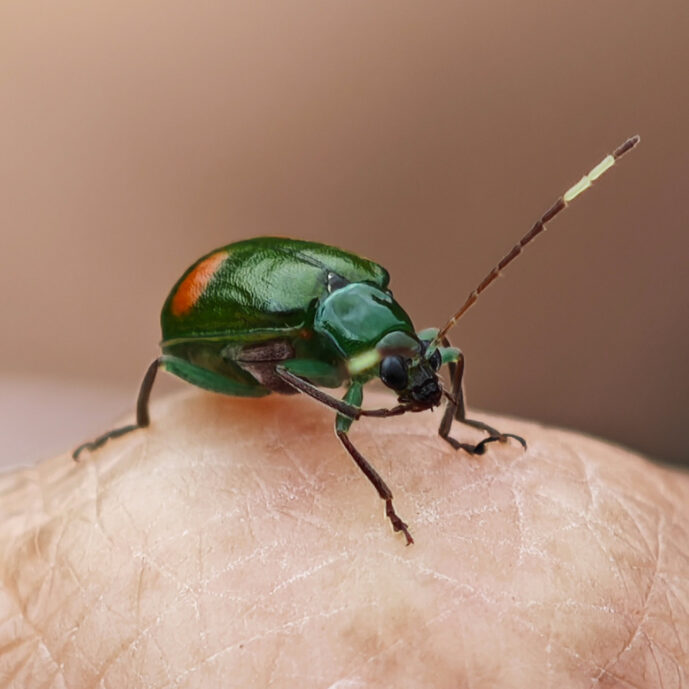
Quick Facts
- Scientific Name: Diabroticina
- Family: Chrysomelidae
- Known Nicknames: Cucumber beetles, Corn rootworms, Spotted cucumber beetles, Striped cucumber beetles
- Average Length: 0.4–1.2 cm / 0.16–0.47 in
- Average Weight: 0.01–0.03 g / 0.00035–0.00105 oz
- Wingspan: 0.8–2.0 cm / 0.31–0.79 in
- Key Feature: Brightly colored yellow or green elytra frequently adorned with black longitudinal stripes or spots
- Primary Diet: Herbivore (Feeding on foliage, pollen, and roots of cucurbits and grasses)
- Range: The Americas (Nearctic and Neotropical regions)
- Habitat: Agricultural fields, meadows, grasslands, and gardens
- Social Structure: Solitary (though often found in high-density feeding aggregations)
- Nesting/Breeding: Soil (eggs are deposited in the earth near host plant root systems)
- Conservation Status: Not Evaluated (NE)
- Population Trend: Stable / Increasing
The Diabroticina subtribe, commonly known as rootworm or cucumber beetles, is a diverse group of leaf beetles celebrated for their striking appearance, typically featuring vibrant yellow or lime-green bodies accented by bold black stripes or spots. These resilient insects are distinguished by their specialized chemical ecology; they possess the remarkable ability to seek out and sequester bitter cucurbitacin compounds from plants, turning these toxins into a potent defense mechanism against predators. Beyond their aesthetic appeal, Diabroticina are renowned for their incredible evolutionary plasticity, particularly in agricultural settings where they have adapted to overcome crop rotation and chemical interventions. With soil-dwelling larvae that target root systems and highly mobile adults that feast on blossoms and foliage, these beetles represent a sophisticated and highly successful lineage within the Chrysomelidae family.
Habitats & Distribution
These beetles are widely distributed throughout the Western Hemisphere, spanning from southern Canada through the United States and Mexico, down to Argentina and Chile. The highest levels of species richness and diversity are concentrated within the Neotropical realm, particularly in Central and South America, which serve as the group's evolutionary stronghold. While some species have restricted endemic ranges, others are highly mobile and have expanded their territories significantly, often following the spread of specific host crops. Their habitats are exceptionally diverse, encompassing tropical and subtropical rainforests, deciduous woodlands, grasslands, and arid scrublands. They are most commonly found in areas where their larval and adult host plants—primarily from the families Cucurbitaceae, Poaceae, and Fabaceae—are abundant. In many regions, they have successfully transitioned into anthropogenic environments, thriving in agricultural landscapes such as maize, soybean, and squash fields, where they often reach high population densities.
Behaviours & Reproduction
These beetles are primarily solitary but frequently aggregate in large numbers on host plants to feed and locate mates. Mating is heavily influenced by chemical ecology; females release volatile sex pheromones to attract males, while both sexes are drawn to plant-produced compounds like cucurbitacins. A notable reproductive strategy involves the male transferring a nutrient-rich spermatophore during copulation. This "nuptial gift" often contains sequestered plant toxins that the female allocates to her eggs, providing the offspring with a chemical defense against soil-dwelling predators. Reproduction typically occurs in the soil, where females deposit their eggs near the root systems of host plants to ensure an immediate food source for emerging larvae. Some species have evolved specialized behavioral adaptations to survive agricultural interventions, such as shifting egg-laying sites to different crops or entering an extended diapause. These strategies allow the larvae to synchronize their development with specific planting cycles, ensuring long-term survival in fluctuating environments.
Diet
Members of the subtribe Diabroticina, including well-known pests like cucumber beetles and rootworms, possess a diet that transitions significantly from their subterranean larval stage to their mobile adult phase. Larvae are primarily specialized root-feeders, often targeting the root systems of grasses like maize or various members of the gourd family, which can lead to significant crop damage. As adults, their diet becomes more varied, consisting of foliage, flowers, and protein-rich pollen from a wide array of host plants. One of the most remarkable features of their dietary behavior is their profound attraction to cucurbitacins, the intensely bitter compounds produced by cucurbits as a defense mechanism. Many species in this subtribe have evolved to not only tolerate these toxins but actively seek them out and sequester them in their tissues, rendering themselves unpalatable to birds and other predators. This pharmacological exploitation of their food source allows them to occupy a unique ecological niche where their diet serves as both a source of nutrition and a sophisticated means of chemical protection.
Colors
Diabroticina beetles typically feature bright yellow, green, or orange base colors marked with contrasting black longitudinal stripes, spots, or bands. These patterns often serve as aposematic warning signals to predators, while the predominantly green hues in many species provide effective camouflage against the foliage of their host plants.
Fun Facts
Diabroticina beetles are master chemical hijackers that voraciously consume bitter cucurbitacins from plants like squash to make themselves toxic and unpalatable to predators. Some species, such as the Western corn rootworm, have evolved an incredible "behavioral resistance" to modern farming by timing their egg-laying to bypass annual crop rotation cycles. Additionally, these resourceful insects possess a sophisticated sensory system, with larvae capable of "sniffing out" their favorite host plants by detecting minute gradients of carbon dioxide moving through the soil.