Colombia’s Indigenous Communities
Explore the legacy of Colombia's ancient tribes, from Tierradentro to Tayrona.
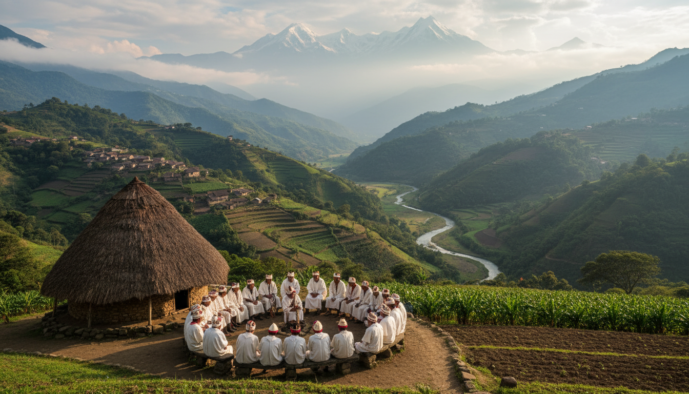
Colombia is a nation rich in diversity, and at its heart lies a vibrant tapestry of indigenous peoples, each with unique histories, languages, and traditions. If you’re curious about the ancestral cultures that have shaped this South American gem, you’ve come to the right place. This article delves into the fascinating world of Colombia’s indigenous communities, offering a comprehensive look at their significance and enduring legacy.
We’ll journey through an overview of these diverse groups, shine a spotlight on some key communities, and explore their living cultural heritage. Prepare to discover the profound stories and living traditions that continue to thrive across Colombia’s breathtaking landscapes.
Essentials
A Tapestry of Peoples: An Overview of Indigenous Colombia
Demographics and Diversity
Colombia’s cultural landscape is profoundly shaped by its first peoples. Officially, the nation recognizes 115 distinct Indigenous groups, a testament to a remarkable and resilient diversity. These communities collectively number approximately 1.9 million people, representing just over 4% of the country’s total population. This demographic figure, however, belies their immense cultural weight. The richness is perhaps most audible in the country’s linguistic tapestry; more than 65 unique Indigenous languages, belonging to various linguistic families, are still spoken today, each carrying with it a unique worldview and ancestral history.
Geographical Distribution
Indigenous communities inhabit some of Colombia’s most ecologically significant and remote regions. Major populations are concentrated in the vast Amazon rainforest to the south, the arid desert of the La Guajira Peninsula in the north, the sacred peaks of the Sierra Nevada de Santa Marta, and the fertile highlands of the Andes. Their presence is not merely geographical but deeply political and spiritual, intrinsically linked to the concept of ancestral territory.
Central to this connection is the legal framework of the Resguardo. These are not simply reservations but legally recognized, collectively owned territories where Indigenous communities exercise rights of self-governance and cultural autonomy. The Resguardo system is a cornerstone of Indigenous rights in Colombia, protecting ancestral lands from private ownership and external exploitation, and ensuring that the land remains the inalienable, collective property of the community.

Spotlight on Key Communities
While Colombia is home to over one hundred distinct Indigenous nations, several communities offer a profound glimpse into the country’s ancestral soul. Their unique cosmologies, social structures, and living traditions are deeply intertwined with the diverse landscapes they inhabit, from arid deserts to sacred mountain peaks and the depths of the Amazon rainforest.
The Wayuu: People of the Sun and Wind
In the starkly beautiful, arid landscapes of the La Guajira Peninsula, the Wayuu people have thrived for centuries. Their resilience is mirrored in a robust culture organized around a matrilineal social structure, where lineage and inheritance are passed down through the mother’s line. For the Wayuu, the dream world is as real and significant as the waking one, providing guidance, warnings, and communication with ancestors. Justice and conflict resolution are traditionally managed not by force, but through a respected system of dialogue led by the `pütchipü’üi`, or oral messengers, who use the power of words to restore harmony.
This intricate cultural fabric finds its most vibrant expression in their craftsmanship. The world-renowned Wayuu `mochilas`, brightly colored woven bags, are more than accessories; each intricate pattern tells a story and reflects the weaver’s thoughts and dreams. Equally significant are the `chinchorros`, large, elaborate hammocks that are central to Wayuu domestic life and social exchange.
The Kogi: Elder Brothers of the Sierra Nevada
High in the isolated peaks of the Sierra Nevada de Santa Marta, a mountain range they consider the “Heart of the World,” live the Kogi people. They see themselves as the “Elder Brothers,” the guardians of planetary balance, believing that their spiritual work is essential for the health of all humanity—the “Younger Brothers.” Their cosmovision is a complex philosophy centered on “Aluna,” the spiritual and material source of all reality.
Community life is guided by the `Mamos`, spiritual leaders who undergo decades of rigorous training in darkness from a young age to learn how to connect with Aluna. The Mamos interpret the laws of nature, perform rituals at sacred sites to maintain equilibrium, and guide their people in living a life of harmony with the Earth. Their message to the outside world is a consistent and urgent plea to cease the destruction of the natural world.
The Tikuna: Masters of the Amazon River
The Tikuna people are one of the most numerous Indigenous groups in the Colombian Amazon, with communities extending across the borders into Brazil and Peru. Their lives are inextricably linked to the rhythms of the great river and the surrounding forest. This profound connection to nature is central to their cosmology, which is rich with stories of spirits, plants, and animals that inhabit their world.
A cornerstone of their cultural identity is the `Pelazón`, a complex and significant female initiation rite. When a girl reaches puberty, she is secluded for a period of months, during which she learns the history, songs, and responsibilities of a Tikuna woman. The ritual culminates in a large community celebration where her hair is plucked, symbolizing her rebirth as an adult. This ceremony reinforces social bonds and ensures the transmission of ancestral knowledge to the next generation.
Other Notable Peoples
Beyond these communities, Colombia’s cultural mosaic includes many other peoples who contribute to the nation’s diversity. In the dense Pacific rainforests of the Chocó region, the Emberá are known for their intricate beadwork and temporary body painting with jagua fruit dye, creating elaborate geometric designs on the skin. In the Andean highlands of Cauca, the Misak (also known as Guambiano) are immediately recognizable by their traditional attire—most notably their deep blue and purple shawls and wrap skirts—which serves as a powerful symbol of their enduring identity and resistance.
Cultural Heritage and Living Traditions
Beyond statistics and geography, the true heart of Indigenous Colombia beats in its living traditions. These are not relics of a bygone era but dynamic, evolving practices that connect communities to their ancestors, their land, and their unique worldview. This cultural heritage is a rich tapestry woven from language, spirituality, and art, expressing a profound relationship with the natural world.
Language and Oral History
Language is the vessel of culture, and in Colombia, this vessel is both vast and fragile. With over 65 distinct Indigenous languages still spoken, the country is a reservoir of linguistic diversity. However, many of these languages are endangered, facing pressure from Spanish dominance and the erosion of traditional lifestyles. In response, communities are leading a powerful fight for linguistic survival through bilingual education programs that ensure children learn both their ancestral tongue and Spanish, strengthening their identity in a multicultural world.
For most of these communities, knowledge has been passed down not through written texts but through the spoken word. Oral tradition is the cornerstone of society, a living library of ancestral laws, creation stories, ecological wisdom, and historical memory. Elders share these narratives during community gatherings and ceremonies, ensuring that the wisdom of generations continues to guide the young and maintain the cultural fabric of their people.
Spirituality and Connection to Land
At the core of Indigenous cosmology is the concept of Madre Tierra (Mother Earth). The land is not an inert resource to be owned or exploited; it is a living, breathing entity that provides sustenance, guidance, and spiritual meaning. This profound connection informs every aspect of life, from farming practices to social organization. All beings—humans, animals, plants, and rivers—are seen as part of an interconnected web of life, and maintaining balance within this web is a sacred responsibility.
This spiritual geography is marked by sacred sites—lakes, mountains, rivers, and forests that are considered portals to the spiritual world and vital for maintaining cosmic equilibrium. These are places of offering, pilgrimage, and ceremony, where communities reaffirm their ancestral pact to protect and care for their territory. Access to and protection of these sites are fundamental to their cultural and spiritual survival.
Rituals and ceremonies are the primary means of communicating with the spiritual world and honoring Mother Earth. Sacred plants play a central role in these practices. The coca leaf, for instance, is used in its natural form for dialogue, meditation, and as an offering to build community and connect with ancestral spirits. Similarly, tobacco is used ceremonially for cleansing and healing. These practices are deeply spiritual and bear no relation to the recreational drug use of the Western world.
Art, Music, and Craftsmanship
Indigenous art is a vibrant expression of cultural identity and a form of storytelling. Each piece of pottery, textile, or beadwork is imbued with meaning, reflecting a community’s cosmology and its relationship with the environment. The geometric patterns on Amazonian pottery might represent river currents or anaconda spirits, while the intricate designs of a Wayuu mochila bag tell a story passed down through generations of women.
Music and dance are integral to ceremonial life, used to invoke spirits, celebrate harvests, and mark important life transitions. The haunting sounds of traditional flutes in the Andes or the rhythmic beat of drums in the Amazon are more than just entertainment; they are a bridge to the spiritual realm. Craftsmanship extends to the creation of these instruments, as well as ceremonial masks and body paint, all made from materials sourced from the surrounding territory.
Symbolism is woven, carved, and painted into nearly every object. The deep blue and purple of Misak textiles symbolize the water and flowers of their high-Andean homeland. The beadwork of the Emberá people forms patterns that offer spiritual protection. This artistry is a living language, communicating identity, beliefs, and ancestral knowledge in a visually powerful and deeply personal way.
Contemporary Challenges and Resilience
The Struggle for Land Rights
Despite constitutional recognition, the relationship between Indigenous communities and their ancestral lands remains fraught with tension. The history of Colombia is marked by centuries of dispossession, a legacy that continues through modern territorial conflicts. For these communities, land is not merely a resource; it is the foundation of their culture, spirituality, and physical survival. The ongoing fight to secure and protect their legally recognized territories, or resguardos, is a central aspect of their contemporary existence.
Today, these ancestral lands face a barrage of external threats. The encroachment of illegal mining operations pollutes rivers and destroys sacred sites. The expansion of large-scale agribusiness, particularly for palm oil and cattle ranching, drives deforestation and displaces communities. Furthermore, the cultivation of illicit crops like coca often brings armed groups onto their lands, trapping communities in the crossfire. Colombia’s protracted internal armed conflict has had a devastating and disproportionate impact, leading to forced displacement, targeted violence against leaders, and the militarization of their territories.
Environmental Threats and Guardianship
Indigenous territories encompass some of Colombia’s most biodiverse and ecologically fragile regions, including vast swaths of the Amazon rainforest and critical mountain ecosystems. Consequently, these communities are on the front lines of global environmental crises. They directly experience the effects of deforestation, water contamination from mining, and the unpredictable weather patterns brought on by climate change, all of which threaten their food security and traditional ways of life.
Herein lies a profound paradox: while Indigenous peoples constitute a small fraction of the global population, they are the guardians of the vast majority of the world’s remaining biodiversity. Their ancestral knowledge of sustainable land management, conservation, and ecological balance offers vital lessons for a world grappling with environmental collapse. Yet, they are the very people who suffer the most immediate and severe consequences of its destruction, a poignant injustice that underscores the global importance of protecting their rights and territories.
Preserving Cultural Identity
In an increasingly globalized world, the struggle to maintain cultural integrity is constant. The pervasive influence of Western culture through media, consumerism, and formal education systems presents significant challenges to the transmission of ancestral knowledge. For younger generations, the pull of urban centers and the pressure to assimilate can lead to the erosion of native languages, spiritual practices, and social structures that have sustained their communities for millennia.
Yet, this pressure is met with powerful resilience. Across Colombia, communities are leading inspiring initiatives to safeguard their heritage. They are establishing bilingual education programs that integrate traditional knowledge with standard curricula, creating cultural centers, and documenting oral histories. The revitalization of ancestral medicine and agricultural practices is a key focus, with elders playing an indispensable role. As the living repositories of memory and wisdom, they guide the youth, ensuring that the intricate tapestry of their culture is not only preserved but continues to evolve and thrive for generations to come.
Rights, Recognition, and Self-Governance
For centuries, the relationship between the Colombian state and its Indigenous peoples was one of conflict and marginalization. However, the late 20th century marked a significant shift, laying the legal groundwork for autonomy and the protection of ancestral rights. Understanding these structures is key to appreciating the resilience and organization of Indigenous communities today.
The 1991 Constitution: A Turning Point
The Colombian Constitution of 1991 was a landmark moment for Indigenous rights. It officially transformed the nation’s self-perception, recognizing Colombia as a pluri-ethnic and multicultural nation. This was not merely symbolic; the constitution enshrined fundamental rights that empowered Indigenous communities in unprecedented ways. It legally acknowledged their right to collective ownership of their ancestral lands, to govern themselves according to their own traditions, and to preserve and practice their unique cultures and languages.
Crucially, it established the principle of “prior consultation” (consulta previa), a legal mechanism requiring the state to consult with Indigenous communities before approving any development projects, legislation, or administrative measures that could affect their territories or ways of life. While its implementation remains a source of constant struggle, this constitutional foundation provided a powerful tool for self-determination and defense.
Indigenous Governance Structures
Autonomy is not just a legal concept; it is a lived reality managed through well-defined traditional structures. These systems of governance are rooted in ancestral knowledge and adapted to the contemporary needs of each community.
The primary territorial unit is the Resguardo, a legally recognized, collectively owned Indigenous territory that cannot be sold or divided. It is the physical and spiritual heart of the community, where traditional laws and customs prevail. Within these territories, the principal governing body is the Cabildo. This council, led by a governor and other elected authorities, is responsible for managing internal affairs, administering justice according to traditional law, and representing the community in negotiations with the state and other external actors.
The Indigenous Guard (Guardia Indígena)
Perhaps one of the most visible and inspiring expressions of Indigenous autonomy is the Guardia Indígena. This unarmed body of volunteers, composed of men, women, and elders, is dedicated to the protection of their communities and territories. Carrying only their symbolic bastones de mando (staffs of authority), they patrol their lands, monitor for external threats, and provide security during community assemblies and protests.
The Guardia is a profound example of powerful, non-violent community defense. They do not rely on weapons but on moral authority, collective organization, and a deep commitment to dialogue and peace. In a country long affected by armed conflict, the Guardia Indígena stands as a testament to the strength of civil resistance and the unwavering determination of Indigenous peoples to defend their right to exist in peace on their ancestral lands.
The Future of Indigenous Colombia: Contributions and Progress
Ancestral Knowledge for a Modern World
Far from being relics of a bygone era, Indigenous communities in Colombia are vital custodians of knowledge essential for contemporary global challenges. Their deep, generational understanding of ecosystems, often referred to as Traditional Ecological Knowledge (TEK), offers profound insights into sustainable living. This ancestral wisdom includes sophisticated land management techniques that promote biodiversity, methods for sustainable agriculture that ensure food sovereignty without depleting the soil, and a vast repository of medicinal plant knowledge.
In an age of climate crisis, this knowledge is not just culturally significant; it is a practical blueprint for resilience. Indigenous practices in conservation, water management, and weather pattern observation are increasingly recognized by scientists and policymakers as crucial components in the fight against climate change and environmental degradation.
Growing Political and Social Influence
After centuries of marginalization, Indigenous peoples in Colombia are claiming a more prominent role in the nation’s political and social landscape. Bolstered by the rights granted in the 1991 Constitution, community leaders and organizations are actively participating in governance at local, regional, and national levels. They have become powerful voices in crucial national debates, particularly concerning peace processes, land reform, and environmental policy.
On both national and international stages, Indigenous representatives advocate tirelessly for human rights, environmental justice, and the protection of their territories. Their movements, like the powerful Guardia Indígena, have inspired social change and brought global attention to the critical links between cultural survival, territorial rights, and the health of the planet.
Ethical Tourism and Respectful Engagement
As interest in Colombia’s cultural diversity grows, a new model of tourism is emerging—one that is led by the communities themselves. Community-based ecotourism offers a sustainable alternative to mass tourism, providing a source of income that supports cultural preservation and territorial autonomy. These initiatives allow visitors a genuine and respectful glimpse into local ways of life, guided by the people who know the land best.
For travelers wishing to engage responsibly, the approach should be one of humility and respect. Consider the following guidance:
- Choose Community-Led Initiatives: Seek out tour operators and lodges that are owned and operated by Indigenous communities or have established, equitable partnerships with them.
- Request Permission: Always ask before taking photographs of people or entering sacred sites. A local guide can help navigate these protocols with sensitivity.
- Purchase Directly: Buy handicrafts like mochilas or woven textiles directly from the artisans. This ensures the full economic benefit goes to the creator and their community.
- Listen and Learn: Approach your visit as an opportunity to learn, not just to see. Value the knowledge being shared and respect local customs and social norms.
By engaging in this way, visitors can contribute positively, fostering a cross-cultural exchange that honors the dignity and autonomy of their hosts. The future of Indigenous Colombia is not only one of survival but of profound and necessary contribution. Their resilience, wisdom, and unwavering defense of the Earth are not just a vital part of Colombia’s identity, but a source of hope and guidance for a more balanced world.