How to Use Facial View, lighting, focal length and Camera Angle to take Flattering Portraits
Master facial views, lighting, focal length, and angles to take stunning and flattering portraits every time.
Essentials
Understanding Facial View: Posing Your Subject’s Face
What is Facial View?
Before you even think about lighting or camera settings, the first decision you’ll make is how to position your subject. Facial view is simply the angle of your subject’s face in relation to the camera. It’s the foundational element of a portrait because it directly influences how the viewer perceives the subject’s facial features, shape, and even their personality. Getting this right sets the stage for everything that follows, turning a simple picture into a compelling portrait.
The Classic Three-Quarter View
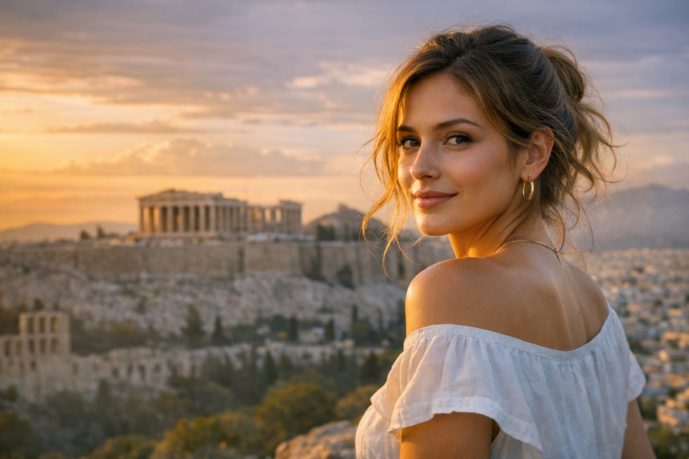
If there’s one go-to pose in portrait photography, it’s the three-quarter view. It is almost universally flattering because it introduces depth and dimension to what is otherwise a two-dimensional medium. By turning the face slightly away from the camera, you create subtle shadows and highlights that sculpt the cheekbones and jawline, adding a sense of volume and form that is often more dynamic and interesting than a straight-on shot.
To achieve this pose:
- Start by having your subject face the camera directly.
- Ask them to slowly turn their head to one side, just until you can no longer see the ear on the far side of their face.
- Finally, have them bring their eyes back to look at the lens. This slight turn is all it takes to create a classic, flattering angle.
The Direct Full-Face View
The full-face view, where the subject looks directly into the lens, is powerful and engaging. It breaks down the barrier between the subject and the viewer, creating a feeling of direct connection, honesty, or even confrontation. This view is highly effective for professional headshots where confidence and approachability are key, or for portraits that aim to highlight a subject’s striking facial symmetry. However, be mindful of its potential pitfalls. Because it’s lit evenly, a full-face view can sometimes make a face appear wider or flatter than it is in reality.
The Dramatic Profile View
A profile view, where we see the side of the subject’s face, is a bold and artistic choice. It shifts the focus from direct engagement to the form and silhouette of the subject. This view is perfect for showcasing a strong jawline, the elegant curve of a nose, or an intricate hairstyle. To capture a clean profile, position your subject so their eyeline is perpendicular to your camera lens. Ensure the background is simple and uncluttered to make their silhouette stand out. This angle is less about connection and more about character, making it ideal for artistic or narrative-driven portraits.
Broad View vs. Short View
This concept introduces the crucial relationship between facial view and your main light source. It’s not just about how the face is turned to the camera, but how that turn interacts with the light.
- Short View: This is achieved when the subject turns their face away from the main light source. The side of the face that is turned toward the camera (the “short” side) is in shadow, while the broader side of the face is illuminated. This technique has a slimming and sculpting effect, as it uses shadow to add definition and contour to the face. It’s a favorite among portrait photographers for creating depth and drama.
- Broad View: This is the opposite. The subject turns their face toward the main light source. This illuminates the largest part of the face visible to the camera (the “broad” side). While this can make a face appear wider and is often less flattering for general portraits, it can be used intentionally to de-emphasize skin texture or for “high-key” photography where you want a bright, airy feel.
[Image: A side-by-side comparison showing the same model lit with Short View (face turned away from light, creating shadow on the near cheek) and Broad View (face turned toward light, illuminating the near cheek).]
Notice how the Short View on the left sculpts the cheekbones, while the Broad View on the right creates a flatter, wider look.
Mastering Lighting: Sculpting with Light and Shadow
Why Light is the Most Critical Element
If the face is our canvas, then light is our brush. More than any other element, light has the power to transform a portrait. It dictates the mood, defines the shape of the face, highlights texture, and directs the viewer’s eye. The fundamental difference between a simple snapshot and a professional, compelling portrait often comes down to the deliberate and skillful use of light. By understanding how to shape and control light, you move from merely capturing a likeness to sculpting a personality.
Hard Light vs. Soft Light
All light is not created equal. The quality of your light source will dramatically impact the final image. The two main qualities to understand are hard and soft light.
- Hard Light, like the kind from direct midday sun or a bare flash, creates sharp, well-defined shadows with a crisp edge. This type of light reveals texture and can create a sense of drama, grit, or intensity. It’s often used for masculine portraits or character studies where you want to emphasize every line and detail.
- Soft Light is diffused and creates gentle, smooth transitions between light and shadow. The shadow edges are blurry and much less defined. Think of the light on an overcast day or the light coming through a large window. Soft light is almost universally flattering as it wraps around the subject’s features, minimizes skin blemishes, and creates a pleasing, gentle look ideal for beauty and classic portraiture.
Key Lighting Patterns for Flattering Portraits
Once you understand the quality of light, you can begin to place it strategically to create specific patterns of light and shadow on the face. These classic patterns are tried-and-true methods for creating flattering and dimensional portraits.
Rembrandt Lighting
Named after the Dutch painter who famously used it in his work, Rembrandt lighting is known for its dramatic and moody effect. It is easily identified by a small, inverted triangle of light on the cheek of the shadow side of the face. This pattern is created by placing the light source above and to the side of the subject, sculpting the face and adding a profound sense of depth.
Loop Lighting
This is perhaps the most common and versatile lighting pattern in portrait photography. Loop lighting is achieved by placing the light slightly above and to the side of the subject, creating a small “loop” shaped shadow from the nose that points down towards the corner of the mouth. It’s a go-to for most photographers because it flatters nearly every face shape by adding definition without being overly dramatic.
Butterfly Lighting
Also known as “Paramount” lighting due to its popularity in classic Hollywood glamour shots, Butterfly lighting is created by placing the main light source high and directly in front of the subject. This casts a small, symmetrical, butterfly-shaped shadow directly beneath the nose. This pattern is exceptionally flattering for subjects with high cheekbones and a defined jawline, creating a clean, glamorous look.
Using Natural Light Like a Pro
You don’t need expensive studio strobes to create beautiful light. The sun is the most powerful light source available, and learning to harness it is a key skill.
- Find “Open Shade”: This is the area just inside the edge of a shadow, like under the awning of a building or at the edge of a group of trees. Here, your subject is out of the direct, harsh sun, but their face is still illuminated by the vast, open sky. This effectively turns the entire sky into a giant, soft light source, creating beautiful, even illumination.
- Use a Window as Your Key Light: When shooting indoors, a large window is your best friend. Position your subject near the window and use it as a large, soft light source. Depending on where you place your subject in relation to the window, you can create loop, Rembrandt, or other lighting patterns with soft, beautiful quality.
- Embrace the Golden Hour: The period shortly after sunrise and before sunset is known as the Golden Hour for a reason. The sun is low in the sky, creating light that is warm, directional, and incredibly soft. This magical light is perfect for creating glowing, flattering portraits with long, gentle shadows and a beautiful, warm color palette.
Choosing the Right Focal Length: Avoiding Distortion
What Focal Length Does to a Face
If you’ve ever taken a selfie up close and wondered why your nose looks disproportionately large, you’ve experienced the power of focal length. In photography, focal length doesn’t just determine how “zoomed in” your shot is; it fundamentally alters perspective. Shorter focal lengths (wide-angle lenses) tend to exaggerate features closest to the camera, causing distortion. Longer focal lengths (telephoto lenses) compress the scene, making facial features appear more proportional and often more flattering.
The choice of lens is not merely a technical decision—it’s an artistic one that can dramatically change the perceived shape of a person’s face. Understanding the basics of lens compression and distortion is crucial for moving beyond simple snapshots and into the realm of intentional, flattering portraiture.
The Dangers of Wide-Angle Lenses (Below 50mm)
Wide-angle lenses are fantastic for landscapes and architecture, but they can be a portrait’s worst enemy when used improperly. These lenses create an effect called barrel distortion, which essentially stretches the image from the center outwards. When you get close to a subject for a headshot, whatever is nearest the lens—typically the nose—will appear significantly larger, while the ears and sides of the face recede, creating an almost cartoonish, unflattering look.
This is a common pitfall for smartphone photography. Your phone’s default camera is a wide-angle lens designed to capture a broad scene. For a better portrait, resist the urge to get physically close. Instead, step back and use your phone’s “2x” or “3x” optical zoom if it has one, or simply frame your subject with more space around them. This will create a much more natural and pleasing perspective.
The Sweet Spot: Classic Portrait Lenses (85mm – 135mm)
There’s a reason professional portrait photographers gravitate towards lenses in the 85mm to 135mm range. These short telephoto lenses are considered the “sweet spot” for portraiture because they offer a beautiful, natural compression. This effect slightly flattens the facial features, minimizing a prominent nose and bringing the ears forward for a more balanced and universally pleasing appearance. The result is a portrait that feels true-to-life, yet subtly refined.
Beyond flattering compression, these lenses offer several key advantages:
- Beautiful Background Blur: The physics of longer focal lengths make it much easier to achieve a shallow depth of field. This creates a soft, blurry background (known as bokeh) that separates your subject from their environment, making them the clear focus of the image.
- Comfortable Working Distance: An 85mm lens allows you to capture a head-and-shoulders shot from a comfortable distance. This is less intimidating for the subject than having a camera right in their face, allowing for more natural expressions.
The “Normal” Lens (50mm)
A 50mm lens is often called a “normal” lens because its field of view closely mimics what the human eye sees. It doesn’t have the dramatic distortion of a wide-angle or the strong compression of a telephoto, offering a very natural and honest perspective. While it can produce some mild distortion if you get too close for a tight headshot, it’s incredibly versatile.
The 50mm lens excels at environmental portraits, where you want to show the subject within their surroundings. It’s perfect for capturing a chef in their kitchen, an artist in their studio, or a family in their backyard. It strikes a perfect balance between subject and scene, telling a more complete story without significantly altering your subject’s features.
The Power of Camera Angle: Changing Perspective
Where you place your camera in relation to your subject can fundamentally change the story and feel of your portrait. It’s not just about looking up or down; it’s about controlling perspective to flatter your subject and convey a specific mood. By simply raising or lowering your camera, you gain immense control over the final image.
Eye-Level: The Standard for Connection
Shooting at your subject’s eye level is the most natural and common camera angle for a reason. It creates a feeling of equality and direct connection between the subject and the viewer. When we look at someone eye-to-eye in real life, it fosters a sense of trust and engagement. This angle translates that same feeling into a photograph.
This is your default, go-to angle for most standard portraits. It’s honest, relatable, and serves as a perfect neutral starting point before you decide to get more creative. It allows the subject’s expression and personality to be the primary focus without any distortion from the perspective itself.
Shooting from a High Angle (Above Eye-Level)
Positioning your camera slightly above your subject’s eye level is one of the most effective and widely used flattering techniques in portrait photography. This subtle shift in perspective offers several immediate benefits:
- It has a slimming effect. By looking down, the angle naturally de-emphasizes the body and neck, directing all the attention to the face.
- It makes the eyes look larger. Subjects will naturally look up towards the camera, which opens up their eyes and makes them appear more prominent and expressive.
- It helps define the jawline. This is the ultimate quick trick to minimize the appearance of a double chin. The downward angle tightens the skin along the jaw and neck, creating a more defined and sculpted look instantly.
When in doubt, raising your camera just a few inches can make a world of difference. It’s a simple adjustment that consistently produces a more flattering result for almost any face shape.
Shooting from a Low Angle (Below Eye-Level)
While a high angle is about flattery, a low angle is about power. Placing your camera below your subject’s eye level and having them look down at the lens can make them appear taller, more dominant, and authoritative. This perspective is often used in corporate or editorial portraits to convey confidence and strength.
However, this angle must be used with caution. It is generally considered unflattering as it can accentuate the chin and neck area in an undesirable way and may distort facial features by making the jaw and nostrils more prominent. Use it purposefully when you want to create a sense of grandeur or power, but be mindful of its potential pitfalls.
The “Turtle” Technique: Defining the Jawline
Regardless of your camera angle, one of the best posing cues you can give a subject is the “turtle.” It might sound silly, but it works wonders for creating a strong, defined jawline and eliminating a double chin. It’s a simple, two-part move.
Ask your subject to push their forehead forward, towards the camera, as if a string were pulling it. Then, ask them to tilt their chin slightly down. This action, often described as “turtling,” pushes the head slightly off the neck, stretching the skin under the chin and creating a clear separation. It feels unnatural to the subject, but from the camera’s perspective, it creates a clean, elegant, and powerful jawline.
Tying It All Together: A Flattering Portrait Recipe
Understanding each element—facial view, lighting, focal length, and camera angle—is crucial. But the real magic happens when you combine them with intention. Here are a few classic “recipes” to get you started. Think of these as proven formulas you can use as a foundation and then adapt to your own creative vision.
The Classic Corporate Headshot
- Facial View: Three-quarter view
- Lighting: Soft loop lighting
- Focal Length: 85mm
- Camera Angle: Slightly above eye-level
This combination is the gold standard for professional headshots for a reason. It projects confidence, approachability, and competence. The three-quarter view adds dimension and is universally flattering. Soft loop lighting is clean and professional, sculpting the face gently without creating harsh, distracting shadows. An 85mm lens provides beautiful compression and allows you to maintain a comfortable distance from your subject, while a camera angle set slightly above their eye-level helps to define the jawline and draws the viewer’s focus directly to the eyes.
The Soft and Natural Outdoor Portrait
- Facial View: Full-face or three-quarter
- Lighting: Natural light in open shade or during the Golden Hour
- Focal Length: 50mm for environment, or 85mm for subject isolation
- Camera Angle: Eye-level
For a portrait that feels authentic, relaxed, and connected, this recipe is perfect. An eye-level camera angle establishes a direct and equal connection with the subject, making the portrait feel genuine and intimate. Using natural light—either the soft, diffused light of open shade or the warm, directional glow of the Golden Hour—creates a beautiful, organic mood. A full-face view enhances the sense of direct connection, while a three-quarter view offers a slightly more classic feel. Your lens choice depends on the story: a 50mm lens will include more of the beautiful environment, while an 85mm will blur the background and make your subject the sole focus.
The Dramatic, Artistic Portrait
- Facial View: Profile or short view
- Lighting: Hard Rembrandt or Split lighting
- Focal Length: 105mm or 135mm
- Camera Angle: Eye-level or low angle
When the goal is to create mood, character, and drama, you need to make bolder choices. A profile view creates a powerful silhouette, while a short view uses shadow to sculpt the face and add a sense of mystery. Pair this with a hard light source to create a Rembrandt or Split lighting pattern; the deep shadows and bright highlights will define features and evoke strong emotion. A longer focal length, like 105mm or 135mm, intensely compresses the scene, creating a very intimate and focused feel. Finally, the camera angle can seal the mood: eye-level for a confrontational feel, or a low angle to give your subject an imposing sense of power and authority.