
Ecuador Galápagos Birding & Naturalist Cruise
Join an exhilarating 13-day birding voyage through the Galápagos, exploring unique ecosystems aboard M/V Samba.
This is a natural-history expedition through the Galápagos, built around slow observation and the rhythm of the sea. For thirteen days and twelve nights we begin in Quito’s highland fringe, where a hacienda buffer day of hummingbird photography, Chiche River Gorge lookouts, and a pre-Inca tunnel prepares us for the islands. From Baltra we board M/V Samba, a locally owned 78-foot Dutch classic carrying fourteen guests with a naturalist guide and crew, and spend eight nights exploring the archipelago.
Our route moves from island to island with early-morning landings and zodiac excursions. We walk among waved albatrosses on Española, circle Kicker Rock’s tuff walls at San Cristóbal, snorkel with sea lions and penguins near Bartolomé and Chinese Hat, and cruise the rich waters off Isabela’s Punta Vicente Roca. Along the way the days blend wet and dry landings, kayak outings, and quiet observation of boobies, iguanas, mockingbirds, fur seals, and tortoises, all while staying aboard the Samba.
After the final cruise morning at North Seymour’s blue-footed booby colony, we transfer to a lodge in the Santa Cruz Highlands. There giant tortoises wander the grounds, and we explore Miconia and tree-fern habitats before visiting the Charles Darwin Station. A final morning of birding around the highlands leads to our flight back to Quito and one night at Hacienda Jimenita before departure.
Why Galápagos Works So Well for Wildlife Photography
The Galápagos brings wildlife, geology, and the sea together within a compact island route. On foot, by boat, and in the water, photographers can work with marine iguanas, sea lions, giant tortoises, seabirds, and volcanic landscapes without relying on a single habitat or one style of excursion. The animals are often approachable, but every encounter remains governed by the rules of a protected archipelago.
Is this trip right for you?
A practical overview of the pace, comfort, and conditions to expect on this journey.
Transport
-
Modes of transport
i
Transport used on this trip- Road transport
- Airplane
- Boat / ferry
-
Travel time:
Estimates incomplete
i
Travel time estimates- 2 flights
Some transfer times are still being confirmed; the daily average is not yet available.
Counts refer to individual road or boat transfers. The daily average includes all itinerary days, including days without transfers. Flights, walking and activity durations are excluded.
Flights are counted separately. Airport procedures, waiting and sightseeing stops are not added to the recorded transfer durations.
Times are approximate and depend on traffic and local conditions.
The journey at a glance
Following the route
The journey moves gradually through 3 chapters.
Route shown schematically for orientation.
Detailed itinerary
Arrival in Quito
Begin your journey with an arrival in Quito, where an airport meet-and-greet and transfer to the hotel are provided. You are met by the guide and transferred to a hotel in the Hotel José de Puembo area, with a customs-declaration address supplied by the source. This first day focuses on a smooth welcome and comfortable settling in, setting the tone for your time in Quito.
Key activities
-
Arrival in Quito
Hacienda buffer day
Day 2 is a hacienda buffer day before the cruise, based around a hotel in Quito in the Hotel José de Puembo area. On the hacienda trails you can experience hummingbird photography, then take in Chiche River Gorge lookouts and visit a pre-Inca underground tunnel. The day also includes preparations for the cruise ahead.
Key activities
-
Hacienda Buffer Day
Baltra and Santa Cruz highlands
Begin with an early breakfast before the included flight from Quito to Baltra, Seymour Airport, where Galápagos Biosecurity Control, Transit Cards, park entrance and quarantine formalities take place, along with first ground-finch views. A water taxi then crosses to Santa Cruz and Puerto Ayora. In the Media Luna highlands, look for Miconia, tree ferns, Galapagos Martin, Galapagos Petrel colony, Galapagos Crake, and tree and warbler-finches. Lunch at El Chato is followed by Western Santa Cruz Giant Tortoises, a Puerto Ayora finch scan, and boarding the M/V Samba.
Key activities
-
Flight, Biosecurity and Santa Cruz Highlands
Floreana
Day 4 aboard the M/V Samba centres on Floreana, beginning with a four-hour crossing and a wet landing on the olivine green-crystal beach. At Punta Cormorant lagoon, look for flamingos, pintails, whimbrels, herons and noddies, plus green turtles and rays on the far beach. A 25-minute dinghy snorkel at Champion Islet targets the rare Floreana Mockingbird and Medium Tree Finch. Post Office Bay’s letter system, kayak or zodiac islet-and-mangrove exploration, and Baroness Lookout, with Dark-billed Cuckoo and Galapagos Flycatcher, complete the day.
Key activities
-
Floreana Day
Española
Spend Day 5 of the Galapagos tour on Española, the oldest island, with the M/V Samba and its naturalist guide. At Punta Suarez, follow the trail past Española Marine Iguanas, sea lions, Blue-footed and Nazca Boobies, Swallow-tailed Gulls, Red-billed Tropicbirds, the Waved Albatross rookery, Galapagos Shearwater, Elliot’s Storm Petrel, Española Mockingbird, Española Cactus Finch and Grey Warbler-Finch. Gardner Bay offers snorkel or kayak sessions with sea lions, mockingbirds, Galapagos Dove and Galapagos Hawk.
Key activities
-
Española Day
San Cristóbal
On day six in San Cristóbal, the M/V Samba positions you for a pre-breakfast circumnavigation of Kicker Rock, where frigatebirds, gulls, tropicbirds, boobies, Brown Noddy and storm petrels gather along the tuff walls, with optional snorkeling among Galapagos Sharks, turtles and eagle rays. Punta Pitt then offers kayaking and a large mixed seabird colony, plus Mangrove Yellow Warblers and the San Cristobal Mockingbird at the point closest to South America. The 78-foot M/V Samba, a locally owned Dutch classic, hosts 14 guests with a naturalist guide and crew.
Key activities
-
San Cristóbal Day
Santa Fe and South Plaza
Spend Day 7 exploring Santa Fe and South Plaza aboard the M/V Samba, a locally owned 78-foot Dutch classic carrying 14 guests with a naturalist guide and crew. At Santa Fe, Barrington Bay’s turquoise inlet and Opuntia cactus forest are home to sea lions, Santa Fe Land Iguanas, Galapagos Hawk and Lava Heron. South Plaza offers a dry landing among Sesuvium color fields, with land iguanas, Swallow-tailed Gulls and Red-billed Tropicbirds. Together these islands pair striking coastal scenery with close encounters with Galapagos wildlife.
Key activities
-
Santa Fe and South Plaza
Santiago and Bartolomé
Explore Santiago Island’s Chinese Hat, where a turquoise channel offers snorkeling alongside sharks, sea lions, Galapagos Penguins and rays. Continue to Bartolomé, whose north beach near Pinnacle Rock hosts a Galapagos Penguin breeding colony, sea lions and green turtles, with eagle rays and sharks visible from the shore. The day’s experiences are part of a Galapagos journey aboard the M/V Samba, a locally owned 78-foot Dutch classic accommodating 14 guests with a naturalist guide and crew.
Key activities
-
Santiago and Bartolomé
Isabela and pelagic navigation
Day 9 begins with a zodiac circumnavigation of Punta Vicente Roca on Isabela, where Cromwell Current-fed waters bring boobies, gulls, storm petrels, Brown Noddy, Flightless Cormorant and a Galápagos Fur Seal colony. The afternoon is spent on pelagic navigation toward North Seymour, targeting Galapagos Petrel and Waved Albatross. The journey takes place aboard the M/V Samba, a locally owned 78-foot Dutch classic accommodating 14 guests with a naturalist guide and crew.
Key activities
-
Isabela (Punta Vicente Roca) and Pelagic Navigation
North Seymour and Santa Cruz Highlands Camp
Begin day 10 with a sunrise dry landing at North Seymour among the largest Blue-footed Booby colony in the Galápagos, with Swallow-tailed Gulls and tropicbirds on basaltic walls. After the final breakfast, farewell the Samba and transfer from Puerto Ayora to Galápagos Camp in the Santa Cruz Highlands, stopping for lunch at the highlands lodge. Spend two nights at the camp, a favorite of Western Santa Cruz Giant Tortoises, and enjoy an afternoon on the grounds.
Key activities
-
North Seymour and Santa Cruz Highlands Camp
Santa Cruz Highlands and Charles Darwin Station
Spend the morning exploring the Santa Cruz Highlands, where Miconia expanses and tree ferns frame the search for Galapagos Martin, Galapagos Petrel colonies, crakes and finches. In the afternoon, visit the Charles Darwin Station to learn about the archipelago’s climate, geography and evolution, then take a boardwalk or strand walk. The day is based at Galápagos Camp in the Santa Cruz Highlands, with two nights there.
Key activities
-
Santa Cruz Highlands and Charles Darwin Station
Morning birding and flight to Quito
Spend the morning birding around the highlands lodge before packing up and returning to Baltra Island. From Seymour, take the included domestic flight back to Quito. The day ends with the night at Hacienda Jimenita, wrapping up the Galápagos portion of the journey with a peaceful stay near the capital.
Key activities
-
Morning Birding and Flight to Quito
Departure
On the final day of the tour, the journey concludes with a transfer to Mariscal Sucre International Airport for flights home. The route begins with a transfer from Hacienda Jimenita to Quito, followed by the departure from Quito. This day is focused on a smooth and straightforward farewell, ensuring travellers reach the airport for their onward journeys after the experiences of the tour.
Key activities
-
Departure (Quito)
Target Species
A curated selection of the iconic species we aim to encounter and photograph throughout our journey.




Albatrosses
Cuckoos
Doves
Ducks
Finches
Flamingos
Flycatchers
Frigatebirds
Gulls
Hawks
Herons
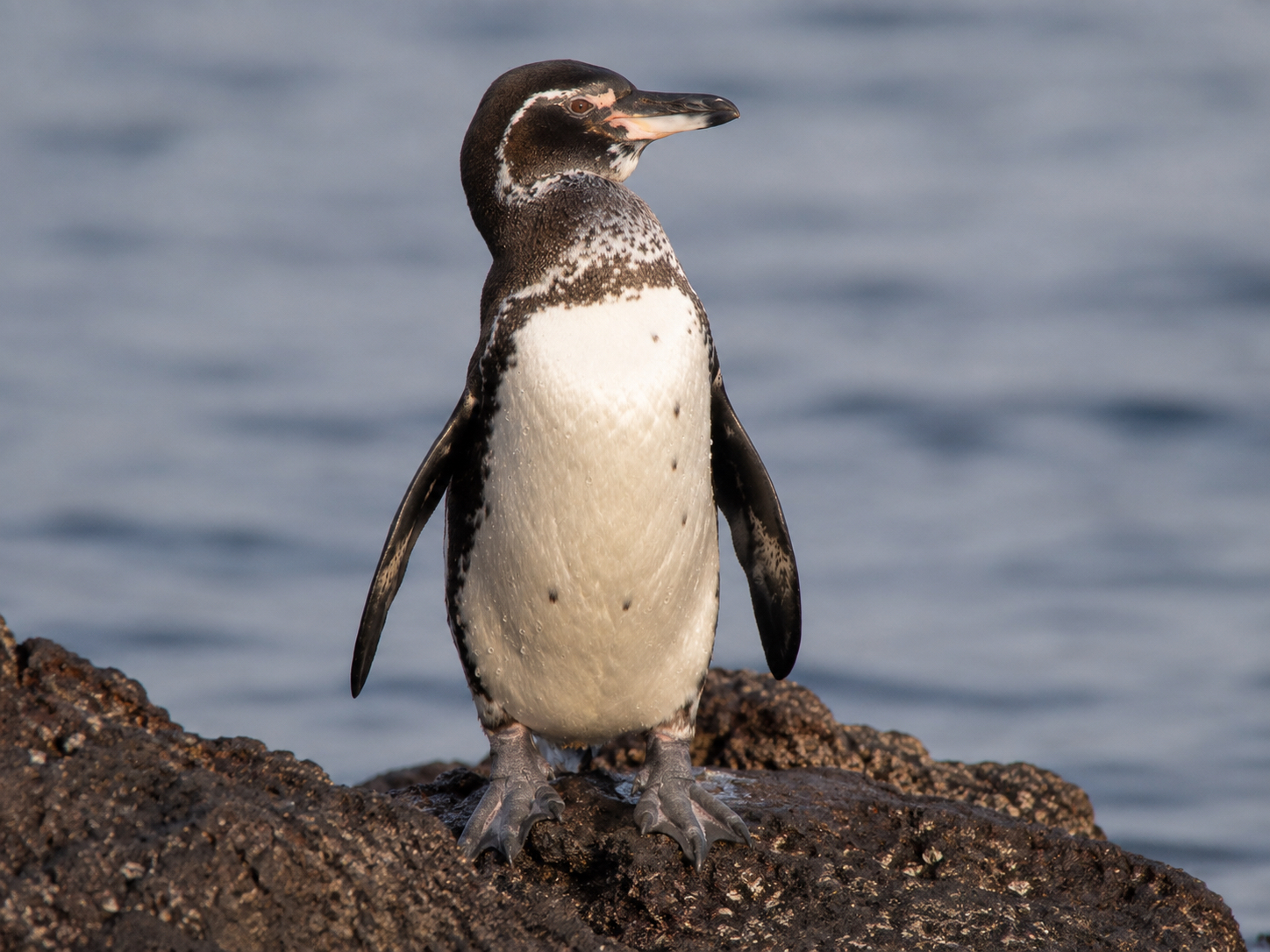
Penguins
Petrels
Rails
Shearwaters
Storm-petrels
Terns
Tropicbirds
Warblers
Accommodation
Where you’ll stay


Price Details
Our tour prices are based on a tiered pricing model. more guests = lower price, per person. That means the prices go down on a per-person basis as more people book onto a specific tour departure.
Price Base
- Price for 2 people: 795 EUR (61 EUR / day)
- Price for 3 to 4 people: 595 EUR (46 EUR / day)
- Price for 5 to 6 people: 495 EUR (38 EUR / day)
- Price for 7 to 8 people: 395 EUR (30 EUR / day)
** Prices are based on double occupancy / twin share basis.
Included
- Hotels mentioned in the program
i
Hotels mentioned in the program- Hotel in Quito (Hotel José de Puembo area) — 2 nights · Uncategorized Hotel
- M/V Samba — 7 nights · Uncategorized Hotel
- Galápagos Camp – Santa Cruz Highlands — 2 nights · Uncategorized Hotel
- Hacienda Jimenita — 1 night · Uncategorized Hotel
- 1 cocktail before dinner
- Water is included
- Professional photographic guidance & instruction by Tristan Quevilly
- Transportation in comfortable vehicles
- Preparation Meeting (Pre-trip briefing and final Q&A session held via Zoom)
- 1h skype session of photo editing in Lightroom or Photoshop
- Restaurant gratuities / tips
- Pre-trip planning assistance
- Detailed trip notes with practical information and cultural insights
- Access to Remote Expeditions custom travel app
Not Included
- Breakfast on day 2, day 3, day 4, day 5, day 6, day 7, day 8, day 9, day 10, day 11, day 12 and Departure day, Lunch on Arrival day, day 2, day 3, day 4, day 5, day 6, day 7, day 8, day 9, day 10, day 11, day 12 and Departure day, Dinner on Arrival day, day 2, day 3, day 4, day 5, day 6, day 7, day 8, day 9, day 10, day 11 and day 12
- Tips
- International flights
- Travel, Medical & Cancellation insurance
- Additional drinks and meals
- Expenses not specified in the program
- Camera Equipment
Deposit
-
30% (179 EUR approx)
i
Your depositThe deposit is used to secure services for your trip, such as hotels and flights.
Payment Options
- Bank Transfer (Recommended): Free
- Credit / Debit Card: Secure payment via Revolut. A 3% processing fee applies.
Booking Conditions
- Deposit: 30% to secure your booking
- Final payment: Due 90 days before departure
- Cancellation more than 90 days before departure: Deposit retained as a 4-year travel credit
- Read the full Terms & Conditions ↗
Where does your investment go?
A transparent look at how your bespoke itinerary is funded.
Services to Expect
Local Guides, Boats, and the Rhythm of a Photography Day
Days alternate between guided walks, conservation visits, boat excursions, snorkeling opportunities, and time in the field with local support. A photography day may include early starts, uneven paths, waiting quietly near wildlife, and transitions between land and water. The emphasis is on observing carefully and making the most of changing light rather than rushing between subjects.
Practical Information
Island Hopping, Sea Conditions, and Flexible Excursion Timing
This is a land-based expedition, but it includes flights, speedboat travel, and full-day yacht excursions. Sea conditions, local regulations, weather, and operator availability can affect departure times or the precise order of visits. The route therefore retains some flexibility, particularly for day tours to neighbouring islands.
Climate, Sun, and Water Conditions Across the Islands
Conditions can change between the coast, highlands, open water, and volcanic terrain. Strong sun, wind, heat, glare, and occasional rain all affect comfort and photography, while boat rides and snorkeling add exposure to saltwater and spray. A flexible approach to clothing, hydration, sun protection, and camera protection is useful throughout the route.
Entry Requirements and Galápagos Transit Controls
Travellers should check the current Ecuador entry requirements and the additional controls applying to travel between mainland Ecuador and the Galápagos before departure. Keep passports and travel documents accessible, allow time for airport and boat procedures, and follow the latest guidance from the relevant Ecuadorian and Galápagos authorities. Requirements can change by nationality and travel date.
Photographing Wildlife Responsibly in a Protected Archipelago
Respect for the islands is part of the photographic experience. Stay on marked paths, keep the prescribed distance, avoid touching or feeding wildlife, and follow local guide and park instructions even when an animal approaches. Quiet observation, restrained movement, and patience protect the behaviour that makes Galápagos encounters so special.
Clothing, Footwear, Snorkelling Gear, and Lightweight Luggage
Pack light, quick-drying layers, sun protection, a hat, swimwear, and sturdy footwear suitable for uneven volcanic paths. Water shoes or secure sandals can be helpful around boats and snorkeling sites. Soft, manageable luggage is preferable for flights, speedboats, and frequent transfers; keep essential medications, documents, and camera equipment with you.
Detailed Trip Notes, including practical tips, cultural insights, and a complete packing list will be sent to you 60 days before departure.
Booking this tour means you agree to our full Terms and Conditions. Below is a summary of the key points. As life is unpredictable, we strongly recommend purchasing comprehensive travel insurance.
- Deposit: A 30% deposit is required to secure your booking. This deposit is refundable for 7 days (less transaction fees), after which it becomes a non-refundable credit, transferable to a future tour offered by Remote Expeditions within 4 years of the cancellation date, less any non-recoverable costs already paid on your behalf.
- Final Payment: The remaining balance is due 90 days before the tour begins.
- Cancellation more than 90 days before departure: You will receive a full refund of any payments made, except for the 30% deposit. Your deposit will be converted into a travel credit valid for 4 years on a future tour Remote Expeditions.
- Cancellation within 90 days of departure: 100% of the tour price is forfeited. There are no refunds or credits.
* This is a summary only. Please read our complete
Terms and Conditions
for full details before booking.
** We strongly recommend all travelers purchase comprehensive travel insurance that covers trip cancellation, medical emergencies, and other unforeseen events.
A few kind words
Colombia Photography Tour 2026
Top notch photographic experience for enthusiasts of nature, culture, and portraits. Tristan is well connected to the area and the local communities with a specialty in indigenous tribes and less-visited areas. Additionally, he is an excellent teacher and will provide incredibly helpful instruction on exposure, lighting, and composition. Our tour was incredibly well organized and ran on time, with full days of photography. I fully recommend Remote Expeditions for your photographic travels!

You are in good hands with Tristan!
Tristan does an amazing job at putting together a culturally rich experience. He also does a great job at adapting to his clients needs and interests. He responds well to feedback. He is both professional and personable. I feel as though I had the opportunity not only to photograph many different elements of Colombia, but that I truly experienced the country and its culture. Our adventure took us from birding in the mountains outside of Cali, to visiting remote indigenous tribes, to visiting active fishing villages, to learning about local and historical musicians and customs, to beautiful settings in the mountains and along the seashore.
I give Tristan the highest recommendation as a guide for Colombia.

Colombia Birding Tour
I visited Colombia with Tristan of Remote Expeditions and would highly recommend him. He put together a wonderful itinerary with great knowledge of the areas and attention to details to give us a wonderful sampling of the country. He is personally very gentle and fun by nature and you will return home feeling very happy and satisfied. Whatever your special interest is, I’m sure he can make an itinerary to exceed your goals.

The difference is in the details
Journeys shaped by experience
Every route is built from time spent in the field: knowing when to linger, when to move on, and which small details are worth noticing.
Room for the unexpected
The best moments are not always on the itinerary. We leave enough flexibility to follow a good conversation, an unusual sighting, or a changing landscape.
Local relationships that open doors
Our journeys are grounded in long-term relationships with people who know their home intimately and are proud to share it in their own way.
A small group, properly looked after
With only a few travellers, decisions remain personal. We can adapt the pace, answer questions, and make sure everyone feels part of the journey.
Frequently Asked Questions
Most Remote Expeditions journeys are arranged privately, so the pace and rhythm can be shaped around the people travelling together. When a scheduled group departure is offered, it is typically limited to four or five travellers.
No. Photography is one of the ways we observe and connect with a place, but it is not a requirement. Our journeys also welcome travellers drawn to slow travel, wildlife, culture, trekking, landscapes, and genuine encounters. You can join with professional equipment, a simple camera, or just your curiosity.
Every itinerary has its own rhythm. Some journeys are gently paced, while others include long walks, trekking, uneven terrain, altitude, or substantial travel days. The practical details on each tour page explain the expected walking, terrain, altitude, distances, and overall physical level so you can decide whether the journey suits you.
Tristan designs the itineraries and personally leads many Remote Expeditions journeys. Depending on the destination and the character of the trip, trusted local guides, drivers, cultural hosts, or specialist leaders may also join part of the route. This combination gives you direct personal support alongside local knowledge.
Often, yes. Private journeys can usually be shaped around your interests, pace, and available time. Fixed group departures have a defined route and dates, but it may still be possible to arrange additional nights, private extensions, or other travel before or after the main journey. Tell us what you have in mind and we will explain what is practical.


